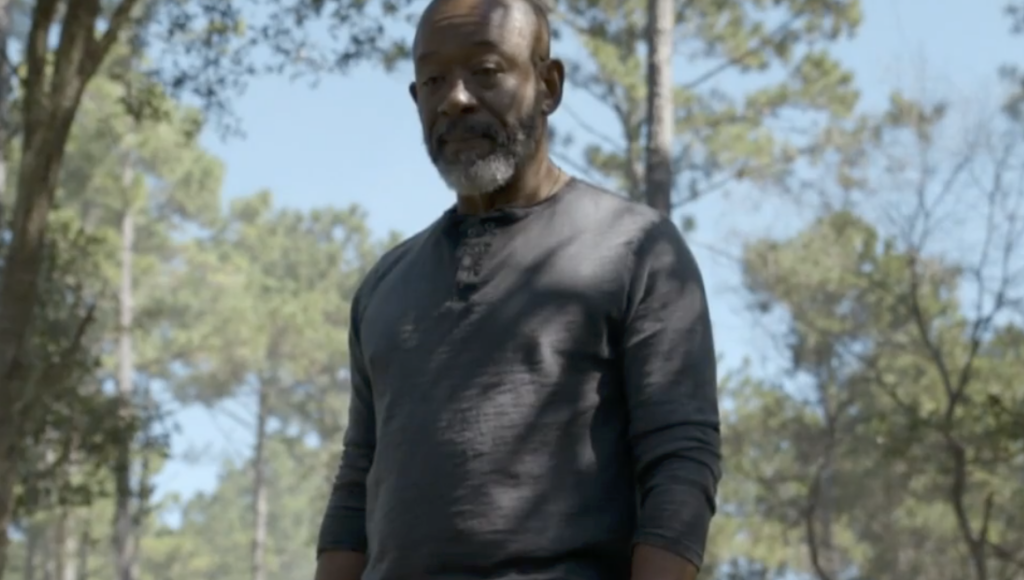
The Walking Dead: Season 6 – Episode 4 “Here’s Not Here”
There was a time, before The Walking Dead became less of a television drama and more of a weekly civic exercise in asking, “Wait, they’re still making this?”, when the series possessed a bruised and startling humanity. Long before the memes, the baseball-bat discourse, and the internet’s favorite pastime of pretending it had stopped watching while somehow knowing every plot twist in real time, the show occasionally stumbled into something almost profound. Not prestige television exactly, this was still a program featuring decomposing corpses chewing on livestock, but something emotionally raw enough to catch you off guard while you were folding laundry.
Most people point to the death of Merle Dixon as one of the series’ great tragedies. And, sure, watching a racist redneck pirate go out in a blaze of sacrificial glory was moving in the same way a Lynyrd Skynyrd song can unexpectedly make you cry in a Chili’s parking lot. But the show’s true emotional apex arrived in a quieter, stranger episode, “Here’s Not Here,” an hour of television so unexpectedly tender it felt as though someone had slipped an A24 screenplay into the wrong production office.
The episode belongs entirely to Morgan Jones, played by Lennie James, an actor capable of conveying more grief in a stare than most performers can in three Oscar campaigns and a podcast interview with Marc Maron. Up until this point, Morgan had drifted through the series like a ghost rattling chains nobody else could hear. We first met him in the pilot, devastated but functioning, trying to protect his son in a world that had collapsed overnight into teeth and noise. When we see him again later, he has become feral with grief, a man so hollowed out by loss that he lives among the dead more comfortably than the living.
And then comes this episode, which asks an almost absurd question for a zombie drama, What if healing, not survival, was the point? The comic books explored this more often and better than the AMC show could ever do.
Morgan encounters a man named Eastman, played with heartbreaking gentleness by John Carroll Lynch, whose face always looks as though he’s either about to offer you soup or reveal something devastating about the human condition. Eastman lives alone in a cabin, tends a garden, practices aikido, and cares for a goat named Tabitha with the kind of devotion Brooklyn hipsters reserve for sourdough starters.
Naturally, Morgan tries to kill him immediately.
Eastman, however, refuses to participate in Morgan’s self-destruction. Instead, he locks him in a cell, not cruelly, but patiently, like a therapist with better upper-body strength. Morgan screams, threatens, and begs for death, while Eastman responds with philosophy, oatmeal, and something called “The Art of Peace,” which sounds exactly like the kind of book your divorced uncle discovers before getting really into hot yoga and CBD gummies.
Slowly, though, the episode reveals itself to be less about zombies than trauma. Eastman, a former forensic psychiatrist, recognizes Morgan instantly: a man trapped inside the worst moment of his life, replaying it endlessly like a broken cassette tape. Their relationship evolves with astonishing delicacy. Morgan saves Tabitha from walkers. Eastman teaches him aikido. They share meals. They laugh, occasionally. In the apocalypse, this counts as intimacy.
And somehow, against all odds, the audience begins to believe in the possibility of recovery. Not the glossy, inspirational kind television usually traffics in, but the exhausting, fragile sort where getting through one more day constitutes a moral victory.
Then, because this is still The Walking Dead, everything falls apart.
In the episode’s devastating climax, Morgan freezes during an attack, confronted by the undead remains of someone he once killed. Eastman intervenes and is bitten, saving him. What follows is less a dramatic death scene than a quiet passing of spiritual inheritance. Eastman, dying while walkers feast on poor Tabitha the goat nearby, a sentence that still sounds insane to type, uses his final moments to remind Morgan that life, even a broken life, remains worth preserving.
It should not work. A philosophy lesson delivered beside a dying goat in the middle of a zombie apocalypse sounds like rejected Samuel Beckett fan fiction. And yet it lands with the emotional force of a freight train.
By the time Morgan buries Eastman and picks up the bo staff again, he is transformed not into a killer but into something gentler. The show achieves what television rarely manages here, it earns its sentiment honestly. There is no manipulative swelling orchestra. There is no cheap twist. There’s just two wounded men discovering that mercy might be the only thing separating humanity from monstrosity.
Which, in retrospect, makes the episode feel almost unbearably hopeful. Not because it insists humanity always wins out, but because it suggests humanity survives at all through small acts of kindness, whether it’s feeding a goat, sharing a meal, or refusing to give up on someone who already has. For one miraculous hour, a zombie show stopped being about the dead and became entirely about the living.
WRITTEN BY: BRYAN KLUGER
Bryan Kluger is an entertainment critic, writer, and podcast host with a deep love for film, horror, and pop culture. His work has appeared in outlets such as Arts+Culture Magazine, High-Def Digest, Screen Rant, The Huffington Post, The Drudge Report, Fark, and Boomstick Comics. He hosts My Bloody Podcast and Fear and Loathing in Cinema Podcast, along with a weekly radio show, where he brings sharp insight, humor, and an unabashed passion for movies to every conversation.