I have a soft spot for biopics, despite their uncanny ability to mistake Wikipedia entries for drama. Too many of them march dutifully from birth to death, checking off milestones as if they were assembling an IKEA bookshelf with one screw inevitably left over. But every so often, a filmmaker remembers that a life is usually changed by a handful of moments rather than a chronology. That’s where Tony, A24‘s remarkable portrait of Anthony Bourdain, quietly distinguishes itself.
Bourdain’s death in 2018 felt strangely personal to millions of people who had never met him. He wasn’t simply the chef who wandered the globe eating noodles in alleyways or convincing us that the best meal in the city was probably hidden behind an unmarked door. Through Kitchen Confidential, he pulled back the greasy curtain on restaurant kitchens and reminded us that the people cooking dinner were artists, pirates, philosophers, addicts, comedians, and exhausted romantics all sharing the same stove.
Rather than attempting to summarize an impossible life, writer-director Matt Johnson (Nirvanna: The Band The show The Movie) wisely narrows the lens. Tony spends roughly a month with a young Bourdain, long before television fame and literary celebrity arrived. It’s a gamble that pays off beautifully because it isn’t interested in the legend. It’s interested in the person who accidentally became one.
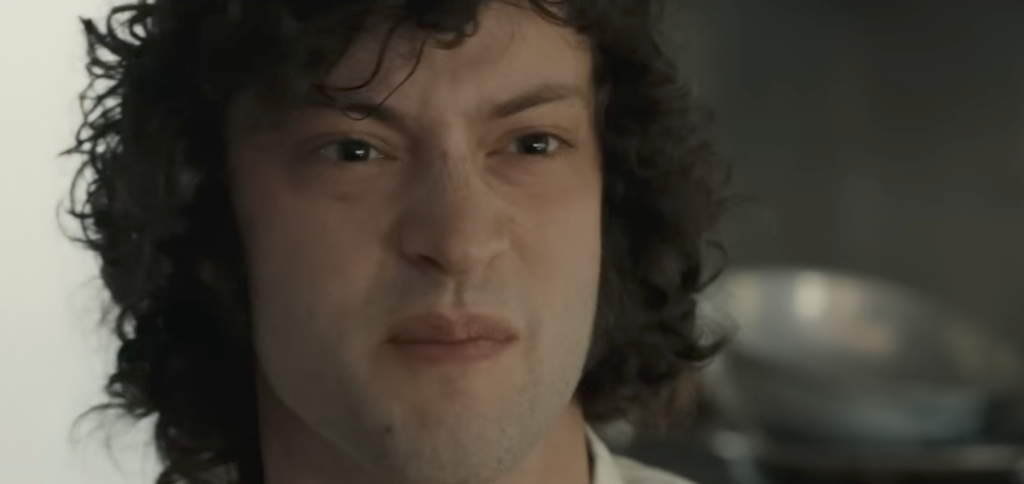
Dominic Sessa, who announced himself so confidently in The Holdovers, delivers the sort of performance that never feels like impersonation. He isn’t chasing Bourdain’s voice or swagger. Instead, he’s discovering them. We meet Tony after he abandons Vassar College to chase a girl to Provincetown, which is a decision with all the impulsive romance and questionable judgment of a twenty-year-old convinced that geography can solve emotional problems. It doesn’t. After one drunken evening and an ill-advised fight, Tony is broke, homeless, and spectacularly directionless.
Fortunately, life has a habit of introducing mentors when we’re least employable. A restaurant chef, played with warmth and weary authority by Antonio Banderas, offers Tony a hammock instead of a lecture. Soon he’s washing dishes alongside a colorful kitchen crew that includes Leo Woodall’s effortlessly charismatic Sal and Stavros Halkias‘ scene-stealing Dimitri, who somehow manages to make every line sound like it wandered in from the funniest table at Thanksgiving dinner.
The kitchen becomes the film’s heartbeat. Anyone who watched The Bear knows that restaurant kitchens operate somewhere between organized ballet and high-grade panic attack, and Johnson captures that same combustible rhythm. Orders fly. Tempers flare. And insults become affection by way of repetition. It’s chaotic, hilarious, exhausting, and strangely comforting. The conversations feel improvised, the relationships lived-in, and the food itself becomes less a product than a form of communication.
What Johnson understands, and what so many biopics miss, is that greatness rarely arrives with a trumpet fanfare. It sneaks in disguised as failure, bad decisions, impossible mentors, and nights you’d rather forget. The film quietly plants the seeds of everything that would define Bourdain, which is the obsession with craft, the restless curiosity, the romance, the addiction, the depression, and the stubborn belief that feeding someone could be an act of love.
The relationship between Tony and his chef is especially satisfying because it refuses sentimentality. Mentor and student disappoint one another, clash, reconcile, and repeat. That’s how real relationships work. Nobody delivers inspirational speeches beneath golden-hour sunsets. They yell, they sulk, they forgive, and occasionally they teach. And then comes the ending.
Johnson lands the final scene with astonishing restraint. Knowing where Bourdain’s life ultimately leads, the film’s last moments don’t manipulate your emotions here. Rather, they simply allow them to arrive on their own. The closing line hangs in the air long after the credits begin, transforming what initially felt like a charming coming-of-age story into something profoundly bittersweet.
With BlackBerry, Matt Johnson proved he could make corporate history unexpectedly thrilling. With Tony, he proves he can make intimacy feel epic. Dominic Sessa confirms that The Holdovers was merely the beginning of what looks to be an extraordinary career. You leave Tony glowing, not because it ignores the darkness that eventually found Anthony Bourdain, but because it reminds you that before someone becomes an icon, they’re simply a young person trying to figure out who they are, one terrible decision, one great meal, and one unforgettable kitchen shift at a time.