What does it actually mean to be a film critic anymore? Not a content creator. Not a personality. And not someone who points a phone at their own face outside a multiplex and declares, before the closing logos have even faded from memory, that a movie is “peak cinema”. No, I mean an actual film critic. Someone whose primary responsibility is not to an algorithm but to an audience. It’s someone who sees a film, thinks about it, wrestles with it, and then attempts the increasingly quaint act of writing about it and having a conversation.
It wasn’t all that long ago, less than a decade, really, that this description didn’t feel nostalgic. There weren’t many of us, but that was part of the appeal. We occupied a peculiar corner of journalism where the currency wasn’t virality but curiosity. We took pride in discovering a film before the rest of the world did and, if we were lucky, we got to convince readers to spend two hours with it. Sometimes that meant championing a tiny independent drama that would eventually find an audience. Sometimes it meant defending a gloriously ridiculous blockbuster starring Sylvester Stallone, punching his way through an army of giant robots. Sometimes it meant sitting through what could only be described as Oscar bait hell of the highest order. You know the yearly screening of a four-hour prestige drama featuring a protagonist who was somehow gay, blind, black, confined to a wheelchair, and escaping Nazi Germany, all before the second act. Hollywood has never met a metaphor it couldn’t stack on top of another.
The point wasn’t whether the movie was expensive or obscure, or profound or silly. The point was that someone had spent years making it. Hundreds, sometimes thousands, of people had poured pieces of their lives into those two hours flickering on a screen. A critic’s job was to meet that effort with effort of their own. They were to pay attention. They were to notice. And they were to ask why a filmmaker made certain choices instead of merely announcing whether the popcorn was fresh.
The best critics became translators between artists and audiences. They didn’t simply tell you whether a movie was good. They suggested new ways of looking at it. Roger Ebert had an uncanny ability to make you feel smarter by the end of a review than you had been when you started reading it. Gene Shalit could make a pun so elaborate that it somehow became criticism. And Richard Roeper carried the tradition into a new generation, proving that disagreement could be entertaining so long as it was informed. They weren’t simply recommending movies. They were participating in a larger conversation about culture.
Film criticism itself became an art form. Entire essays were devoted to the many cinematic personalities of Sam Raimi, who somehow made horror, slapstick, and comic books feel like close relatives. Other writers spent thousands of words wondering why Hollywood periodically became obsessed with volcanoes, asteroid impacts, body-swapping, or killer insects, as though every executive in Los Angeles attended the same strange dream one Tuesday evening and woke up determined to greenlight identical projects. Those essays weren’t just reviews. They were cultural archaeology. They excavated trends, anxieties, and obsessions buried beneath explosions and romantic subplots.
People read criticism because they enjoy reading criticism. The review wasn’t merely consumer advice. It was an essay worth arguing with. Readers wrote letters to newspapers. They debated critics over dinner. They clipped reviews out of magazines and handed them to friends with the same enthusiasm usually reserved for recipes or baseball scores. The critic’s opinion wasn’t sacred, but it mattered enough to challenge.
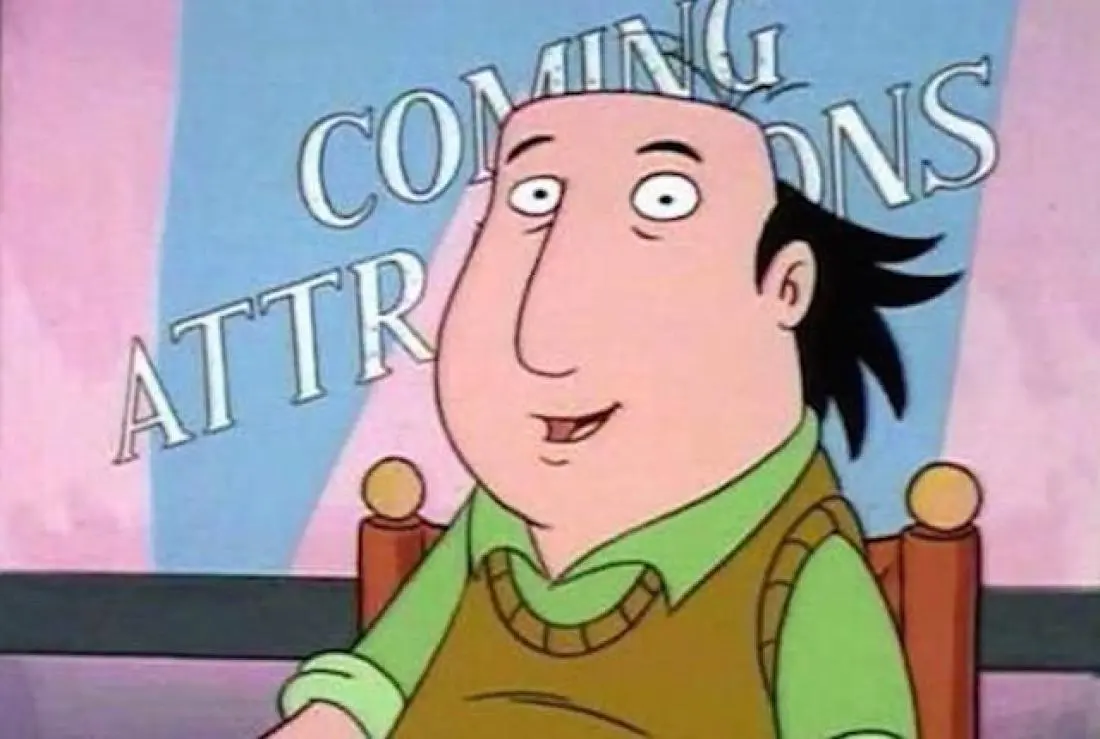
Hollywood even managed to laugh at the profession. The Critic, with Jon Lovitz voicing the permanently exasperated Jay Sherman, remains one of the sharpest satires of movie culture ever made. The joke wasn’t just that Sherman hated almost everything. It was that someone could earn a handsome living thinking deeply about movies. Even in the early nineties, the idea of a film critic making a million dollars a year felt hilariously absurd, which was precisely why the joke landed.
Then there’s Notting Hill, a romantic comedy that asks us to believe an ordinary London bookseller accidentally falls in love with the most famous actress on Earth. I remain convinced that Christopher Nolan’s Inception is the more plausible premise. Dreams inside dreams seem downright documentary compared with Julia Roberts strolling into Hugh Grant’s travel bookstore. Yet buried inside that fairy tale is one of the better depictions of film journalism. The press junket sequence is played for laughs, but it quietly illustrates what critics and entertainment journalists once did best. They prepared, they watched the film, they researched the actors, they understood the director’s work, and they arrived with questions instead of catchphrases. Even when the conversation veered into celebrity gossip or whether a science-fiction movie contained horses and hounds, there remained an assumption that the person asking the question had actually done the homework.
Lately, however, something strange has happened. The profession hasn’t disappeared so much as it’s been crowded out by another occupation entirely. The influencer has arrived, and not as a supplement to criticism, but increasingly as its replacement.
Spend five minutes scrolling through social media, and you’ll find them in abundance. They’re dancing in grocery stores, promoting protein powder, inviting you to “get ready with me,” interviewing strangers with questions no sane person has ever wondered about, staging pranks that should probably qualify as misdemeanors, and somehow accumulating audiences larger than the circulation of most newspapers. Good for them. Building an audience is difficult.
But somewhere along the way, movie studios and the public-relations firms that represent them decided these personalities should become the first voices audiences hear about new films. Not because they’re critics. But because they’re advertisements with ring lights.
Take the recent Supergirl movie, which is the latest attempt by James Gunn to breathe fresh life into the DC universe. Before the general public had even bought their first bucket of popcorn, influencers were ushered into early screenings like they’d discovered penicillin. Within minutes of the credits rolling, if they even stayed for them, social media was flooded with the same ten-second videos. Mouths were agape. Eyes bulged. And the yells of, “Best superhero movie ever made!” “James Gunn has done it again!” “Absolute masterpiece!” was screamed into the phone. It was as if they had all attended the same motivational seminar entitled How to Say Everything Without Actually Saying Anything.
Then reality arrived. The film slipped below fifty percent on Rotten Tomatoes, a site that, despite all of its flaws and endless internet debates, still aggregates the opinions of people whose full-time occupation is to watch movies, think about them, and explain why they reached the conclusions they did. Agree with those critics or don’t, that’s the fun of criticism. But at least there is criticism. There are arguments, context, comparisons, and history. A review is meant to be the beginning of a conversation, not the end of one.
And if you spend enough time at a modern press screening, you’ll notice something peculiar. The movie is almost secondary to these influencers. Before the lights even dim, their phones are out. Selfies are taken. Stories are uploaded. Half the audience seems less interested in watching the film than documenting the fact that they were invited to watch the film. The credits barely finish before they’re sprinting toward the lobby to record an immediate reaction that lasts somewhere between seven and ten seconds. By the next morning, the movie has vanished from their feeds, replaced by skincare routines, energy drinks, and whatever product happened to sponsor Tuesday.
Cinema becomes just another stop on the content assembly line. And that’s what bothers me. It’s not because every opinion needs to be a graduate thesis on Italian Neorealism, but because movies deserve more than a reflex. They deserve a thought. And somewhere along the way, we’ve confused immediacy with insight.
I don’t expect every person who attends a press screening to have read André Bazin or Pauline Kael. Heaven knows I haven’t spent every weekend buried in French film theory either. But I do hope they’ve developed enough curiosity to ask how a movie came together. Why did that director make those choices? What went wrong during the famously chaotic production of The Island of Dr. Moreau? How many actors almost played Sam Wheat before Patrick Swayze wandered into Ghost and somehow made pottery erotic for an entire generation? Those stories are fascinating because they deepen our appreciation for the finished work. They remind us that filmmaking is messy, miraculous, and a collaborative labor.
Instead, too many red carpets have become carnivals of triviality. An actor spends three years preparing for a role, shoots through freezing rain and fourteen-hour days, collaborates with hundreds of artists, composers, editors, stunt performers, costume designers, and cinematographers, only to be greeted with the immortal question: “So… pineapple on pizza?”
That’s it. There’s no discussion of the character, no curiosity about the filmmaking itself, and no interest in the craft. It’s just pizza toppings. If aliens intercepted one of these interviews, they’d assume cinema was invented solely to facilitate conversations about mozzarella.
Now, before anyone accuses me of yelling at clouds, let me be clear. I don’t actually blame the influencers. Really, I don’t.
They’re playing the game exactly as it’s been designed. They’re doing what they believe is creative, or at the very least what the algorithm rewards. If a fifteen-second reaction earns more engagement than a two-thousand-word essay, they’ll make the fifteen-second reaction every time. That’s not a moral failing. That’s economics.
The blame belongs elsewhere.
It belongs with the studios and, perhaps even more so, the public-relations firms that have quietly become the gatekeepers of movie culture. They decide who gets invited. They decide whose voice is amplified. Increasingly, they’ve traded scholarship for reach, criticism for promotion, and curiosity for engagement metrics. They’ve forgotten that for decades it was critics, historians, and serious entertainment journalists who built anticipation around movies in the first place. They were the bridge between filmmakers and audiences. They helped audiences discover why Julia Roberts saying yes to a script mattered, or why the latest Steven Spielberg movie about extraterrestrials somehow felt less like an alien invasion than a Jackson Pollock painting that accidentally learned how to levitate.
The critic wasn’t simply reviewing movies. The critic was creating movie lovers.
Another recent example came much closer to home. Here in North Texas, Universal opened its new family theme park based on its film and television properties. For the preview event, the guest list leaned heavily toward influencers. Predictably, social media was soon awash in glowing declarations that this was the happiest place on Earth, not currently occupied by a mouse in Orlando.
Then the public showed up.
The internet, as it occasionally does, responded with the subtlety of a true-crime documentary crashing headfirst into a stand-up comedy special. Visitors posted videos that looked nothing like the promotional reels. There were no desirable rides or elements, the attractions were underwhelming, and people were frustrated. Comment sections are filled with people asking whether the influencers had actually attended the same park. It was hilarious, depressing, and oddly reassuring all at once. Reality, it turns out, still has a stubborn habit of showing up.
Perhaps that’s why I couldn’t help smiling when I heard that Christopher Nolan reportedly had no interest in influencer screenings for The Odyssey. Whether by philosophy or practicality, the idea feels refreshing. Imagine spending years adapting one of the oldest and greatest stories ever written, coordinating thousands of artists across multiple continents, only to have your life’s work summarized by someone shouting, “Ten out of ten! Absolute cinema!” before sprinting back to their rental car.
I’d decline that invitation, too. Cinema deserves better than a drive-by reaction. So do audiences.
Film criticism has survived radio, television, cable news, DVDs, blogs, podcasts, YouTube, and every technological revolution that promised to replace it. It will survive this one as well. Not because critics are somehow nobler than everyone else, but because genuine curiosity has an astonishing shelf life. There will always be readers who want more than a thumbs-up or a fire emoji. They’ll want to know why a movie works. Why does it fail? And why it matters.
Influencers may dominate the algorithm today, but algorithms have the lifespan of fruit flies. Criticism has endured for more than a century because it’s built on something far less fashionable and infinitely more durable. It’s the art of paying attention.
And as long as filmmakers keep spending years creating worlds for us to inhabit, someone ought to spend more than ten seconds thinking about them, even if it’s just to convince the rest of us that the next Jason Statham movie might secretly be worth our time.