When most people think of Stanley Kubrick, they think of perfectionism, existential dread, impossible tracking shots, and actors who probably still wake up in a cold sweat decades after filming. “Funny,” oddly enough, rarely enters the conversation. Which is a shame, because Kubrick was one of cinema’s slyest comedians. His jokes just happened to involve nuclear annihilation, ultraviolence, haunted hotels, and the occasional masked orgy.
Even Eyes Wide Shut, arguably the least likely candidate for a laugh, ends on a punchline that somehow manages to be vulgar, romantic, and profound all at once. Kubrick understood something many filmmakers don’t. He knew comedy isn’t the opposite of horror. They’re roommates. They borrow each other’s clothes.
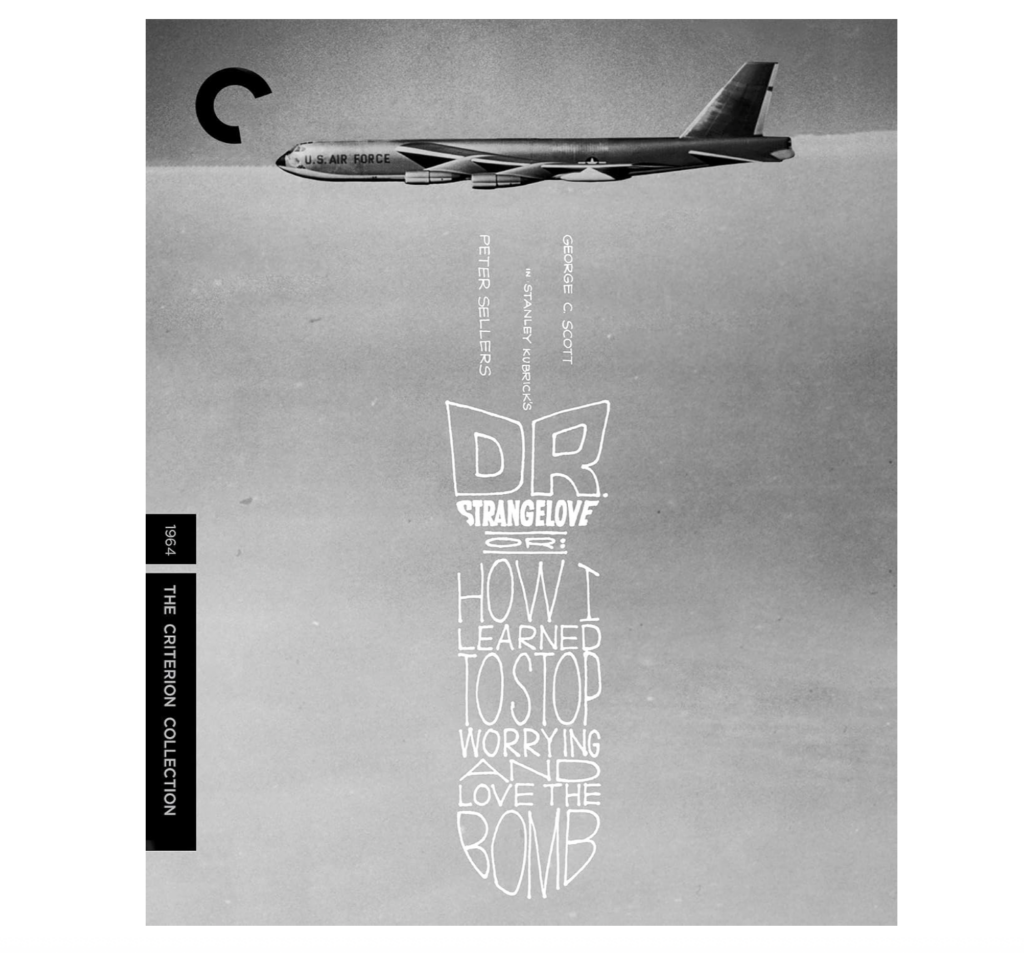
Nowhere is that more apparent than in Dr. Strangelove or: How I Learned to Stop Worrying and Love the Bomb, a film that asks one of history’s darkest questions, “What if mankind accidentally ended itself because a handful of powerful men were too proud, too paranoid, and too incompetent to simply pick up the phone?” The film somehow answers it with one of the funniest movies ever made. It’s the cinematic equivalent of hearing terrible news and laughing because your brain simply doesn’t know what else to do.
The story behind Dr. Strangelove is almost as delightful as the film itself. Kubrick originally intended to make a sober adaptation of Peter George’s Cold War thriller Red Alert. Somewhere along the way, however, he realized that reality had become too ridiculous to play straight. Nuclear brinkmanship, mutually assured destruction, and military bureaucracy never required exaggeration. It only needed someone willing to point a camera at it and say, “Does anyone else find this insane?” The answer, thankfully, was yes.
Released in 1964, Dr. Strangelove represents the moment Kubrick transformed from a gifted filmmaker into one of cinema’s great architects. It’s difficult to imagine his later masterpieces without it. The icy confidence of 2001, the calculated cruelty of A Clockwork Orange, and the unnerving precision of The Shining all begin here, in a war room where grown men argue over the apocalypse like neighbors debating lawn maintenance.
The premise is beautifully absurd. A deranged Air Force general, played with granite-faced conviction by Sterling Hayden, decides that the Russians are contaminating America’s “precious bodily fluids” and unilaterally launches a nuclear strike. Locked away with a bewildered British officer, performed by Peter Sellers, effortlessly stealing scenes before every breakfast, he refuses to reverse the order. Meanwhile, aboard a B-52 bomber, Slim Pickens leads his crew toward Soviet airspace with the calm confidence of a man driving cattle across Texas instead of delivering civilization’s obituary.
Back in the Pentagon’s legendary War Room, the President of the United States (also Peter Sellers), an increasingly unhinged General Buck Turgidson (George C. Scott at his gloriously theatrical best), and a collection of nervous military advisors attempt to prevent global extinction. Just when things seem incapable of becoming more ridiculous, the Russian ambassador casually mentions that the Soviet Union has secretly built a Doomsday Machine capable of destroying all life on Earth. Naturally, nobody thought to tell anyone.
Watching Dr. Strangelove in 2026 feels less like revisiting history than checking the headlines through a funhouse mirror. Kubrick understood that bureaucracies rarely collapse through villainy alone. More often, they’re undone by paperwork, ego, poor communication, and the astonishing confidence of mediocre men. The terrifying joke isn’t that someone wants to end the world. It’s that someone might accidentally do it before lunch.
Comedy this fearless feels almost extinct now. Modern studio comedies often revolve around awkward first dates or adults behaving like overgrown summer campers. Kubrick built an entire farce around thermonuclear war and somehow made it feel both hilarious and horrifying. Imagine pitching Dr. Strangelove today.
“So… it’s a comedy.”
“Great.”
“About global nuclear extinction.”
“…Go on.”
“And the funniest character used to be a Nazi.”
“…Security?”
The miracle is that every impossible choice works.
PURCHASE DR. STRANGELOVE CRITERION HERE
Peter Sellers deservedly receives much of the attention for playing three wildly different roles, each with its own rhythm, accent, and comic energy. His President is wonderfully exhausted, sounding like a middle manager apologizing to a neighboring office for accidentally destroying the planet. His Group Captain Mandrake possesses exactly the sort of quiet British politeness one hopes would accompany the end of civilization. And then there’s Dr. Strangelove himself, whose increasingly uncontrollable Nazi salutes somehow become one of the greatest physical comedy performances ever committed to film.
But every time I revisit Dr. Strangelove, I leave thinking about George C. Scott. He attacks General Turgidson with the enthusiasm of a Shakespearean actor accidentally wandering into a Looney Tunes cartoon. Every line reading is somehow bigger than the last without ever feeling false. Kubrick reportedly tricked Scott into giving exaggerated rehearsal takes, assuring him they wouldn’t be used. Naturally, Kubrick used them. It’s one of the great acts of cinematic mischief, and Scott’s volcanic performance remains one of the funniest portrayals of military arrogance ever captured.
Then there is Slim Pickens, whose climactic ride atop a falling nuclear bomb has become one of the defining images in movie history. It has been referenced, parodied, imitated, and celebrated for decades, yet nothing diminishes its impact. The first time you see it, you laugh. The tenth time, you laugh harder because you realize Kubrick somehow transformed the literal end of the world into slapstick. Few filmmakers would even attempt such tonal gymnastics. Fewer still would succeed.
Part of the reason the comedy lands so perfectly is that Kubrick never cheats visually. Dr. Strangelove isn’t photographed like a broad comedy. It’s shot with almost documentary seriousness. Gilbert Taylor’s stark black-and-white cinematography lends every frame an unnerving credibility. Ken Adam’s legendary War Room remains one of cinema’s greatest sets, which is a cavernous cathedral dedicated to bureaucracy and bad decisions. It’s so convincing that Ronald Reagan reportedly asked after becoming president where the actual War Room was, only to discover Kubrick had invented it. Reality has spent the last sixty years trying to catch up.
Criterion’s new restoration feels like the definitive presentation of a film that has somehow remained timeless despite being built around Cold War anxieties. The original camera negative was lost decades ago due to overprinting and damage, forcing Criterion to reconstruct the film from surviving fine-grain masters, duplicate negatives, and archival prints. The painstaking 4K restoration removes decades of scratches, debris, flicker, and instability without sanding away the movie’s wonderfully organic film texture.
The improvements aren’t flashy, and that’s precisely why they work. Contrast feels richer. Close-ups reveal new facial detail, allowing every twitch, grimace, and nervous glance to register more clearly. Grain flows naturally across every frame, preserving the tactile quality of 35mm film instead of sterilizing it into digital perfection. Black-and-white photography often benefits more from restraint than reinvention, and Criterion wisely understands the difference.
Likewise, the audio options reflect a welcome philosophy that’s becoming increasingly rare: why force viewers to choose between preservation and enhancement when they can have both? The original LPCM mono track sounds remarkably clean, preserving the theatrical experience with admirable fidelity. Dialogue remains crisp, and Laurie Johnson’s score possesses surprising warmth. The DTS-HD MA 5.1 mix, however, gently expands the sonic landscape without ever feeling revisionist. It isn’t trying to transform Dr. Strangelove into an action movie. It simply gives the bomber interiors, the War Room, and Kubrick’s carefully constructed atmosphere more room to breathe. I’m generally a believer that movies should sound like themselves, not like they’re auditioning for Dolby Atmos commercials. This 5.1 mix respects that philosophy. It enhances rather than overwhelms.
And then there are the supplements. Criterion approaches Dr. Strangelove the way a great museum approaches a masterpiece. It doesn’t place it behind glass, but rather surrounds it with context that deepens appreciation without diminishing mystery. The documentaries, interviews, and archival materials illuminate Kubrick’s obsessive process while somehow making the finished product seem even more miraculous.
Rewatching Dr. Strangelove, I’m struck by how few satires improve with age. Most become historical curiosities once their immediate targets fade from memory. Kubrick’s film only grows sharper because its subject was never really the Cold War. It was human arrogance, bureaucracy, blind confidence masquerading as competence, and the comforting illusion that intelligent people are always in control. Those themes, regrettably, have never gone out of style.
Perhaps that’s why Dr. Strangelove remains so exhilarating. It trusts its audience to recognize absurdity without underlining every joke in fluorescent ink. It understands that laughter can be unsettling and that the funniest punchlines often leave bruises. Criterion has delivered what is, without question, the definitive home-video edition of one of the greatest films ever made. The restoration is superb, the audio options exemplary, and the supplements exhaustive without becoming exhausting. Even if your shelves already contain multiple copies of Dr. Strangelove, and if you’re reading this, they probably do. This release earns its place. Some films age gracefully. Dr. Strangelove seems to age with increasing suspicion that it was never satire to begin with.