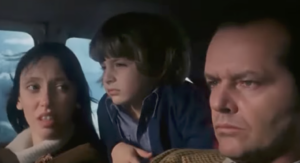
It’s never easy to talk about films that wander into the treacherous terrain between adult and child, innocence and implication, or narrative daring and audience discomfort. It’s the cinematic equivalent of walking a tightrope in loafers. It’s possible, but only if you’re unnervingly confident or French. We’ve tiptoed this line before with Harold and Maude, Lolita, and even the jet-lagged melancholia of Lost in Translation, all of which ask us to sit very still and tolerate the uneasy feeling that perhaps this is beautiful, but also perhaps we should alert someone.
Enter Serge Bourguignon, who, with the kind of quiet audacity only a man with very few film credits and a Palme d’Or for a short documentary could muster, strode onto this tightrope and performed a cinematic arabesque with Sundays and Cybele. It’s a film so delicate and so risky that one imagines any Hollywood executive presented with the script would’ve immediately dropped it, wiped their hands, and asked for something with more car chases and fewer ethical minefields. But the French, bless them, saw poetry where others saw paperwork.
The film, originally titled Sundays in Ville d’Avray but retitled, presumably, to help American audiences avoid mispronouncing “Avray” with a hard “v”, offers a story of two wounded souls who find in each other not romance but refuge. Pierre (Hardy Krüger), a fighter pilot whose wartime trauma has left him emotionally scrambled, wanders through postwar France like a man trying to remember where he parked his conscience. He’s haunted by the image of a young Vietnamese girl he saw moments before the crash landing, who was a symbol of innocence he was powerless to protect. His girlfriend, Madeleine (Nicole Courcel), serves as his caretaker, though their domestic dynamic is more “calm roommate arrangement” than passionate postwar love affair.
Then there is Cybele (Patricia Gozzi), a young girl abandoned at an orphanage by a father whose parenting philosophy seems to be “no thank you.” Pierre, recognizing in her the same fragile innocence that haunts him, begins visiting the girl on Sundays. It’s an arrangement that blooms into a relationship more akin to two children playing than anything resembling adult impropriety. Of course, Bourguignon, being French (again, important), sprinkles in metaphors and subtext that raise eyebrows without ever quite crossing the line. Think of it as poetic ambiguity rather than FBI bait.
Naturally, society does what society does best. It misunderstands everything. Instead of inquiring, observing, or even mildly wondering whether perhaps, just perhaps, not every interaction between an adult and child must end in scandal, the townspeople assume the worst. Because that is what townspeople do. If there is no fire, they will light one.
The miracle of the film is how heartbreakingly innocent it remains. Both Pierre and Cybele are emotional adolescents. They are two stunted beings trying to reclaim something soft in a world that has made a hobby of bruising them. Krüger plays Pierre with a kind of fragile masculinity that feels decades ahead of its time, while young Gozzi gives a performance so layered and instinctive that the word “precocious” feels insulting. These two are not romantic partners, they are fellow survivors, clinging.
It’s no wonder Bourguignon snatched up three Oscars for this, including Best Foreign Film, Best Score, and Best Screenplay, before quietly retreating from the limelight like a cinematic monk, making only two more features. Had he continued, who knows what other tender catastrophes of the human heart he might have captured.
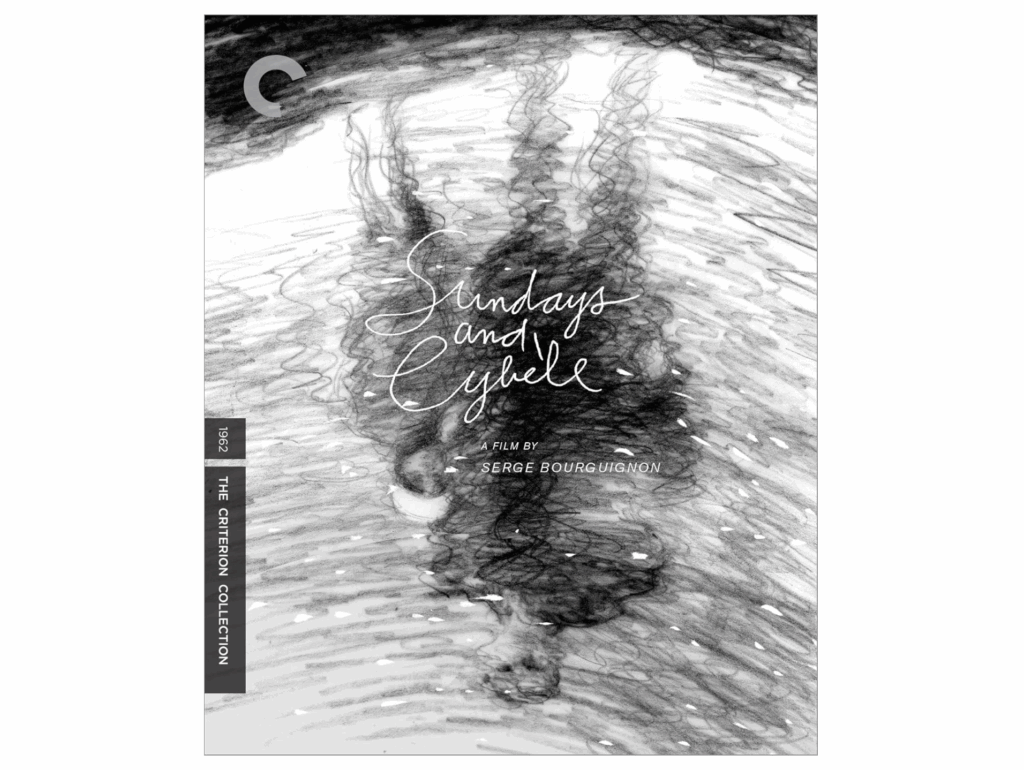
PURCHASE SUNDAYS AND CYBELE HERE
Criterion, as usual, has swept in like the patron saint of forgotten masterpieces and delivered the film in a pristine 1080p, newly restored from the original camera negative. The result is so clean with grain intact, wrinkles detailed, and a grayscale shimmering like a Parisian winter coat, that one wonders whether Bourguignon himself might prefer this digital resurrection to the original prints. The sound is restored from the 35mm magnetic track, and is pure, simple, and crystalline, with dialogue that floats gently above the ambient hum of mid-century France.
The supplemental features form a delightful buffet of cinephile nourishment, including interviews with Bourguignon, Gozzi, and Krüger, as well as a restored version of Bourguignon’s short film Le Sourire, a serene Buddhist meditation that won the 1960 Palme d’Or for Best Short Film and proves the man had a knack for capturing fragile souls long before Cybele.
In the end, Sundays and Cybele remains a masterwork of emotional subtlety. It’s a tragic, beautiful tale of innocence, loneliness, and the ways broken people sometimes find each other. It’s a film that will linger with you, just as Pierre’s trauma lingered with him, not hauntingly, exactly, but insistently, like a memory you’re not quite ready to let go. Criterion has, unsurprisingly, knocked it out of the park. Highly recommended for anyone who enjoys great cinema, impeccable restorations, and the occasional ethical panic attack.
WRITTEN BY: BRYAN KLUGER
BRYAN KLUGER, A SEASONED VOICE IN THE REALM OF ENTERTAINMENT CRITICISM, HAS CONTRIBUTED TO A WIDE ARRAY OF PUBLICATIONS INCLUDING ARTS+CULTURE MAGAZINE, HIGH DEF DIGEST, BOOMSTICK COMICS, AND HOUSING WIRE MAGAZINE, AMONG OTHERS.
HIS INSIGHTS ARE ALSO CAPTURED THROUGH HIS PODCASTS; MY BLOODY PODCAST AND FEAR AND LOATHING IN CINEMA PODCAST; WHICH LISTENERS CAN ENJOY ACROSS A VARIETY OF PLATFORMS.
IN ADDITION TO HIS WRITTEN WORK, KLUGER BRINGS HIS EXPERTISE TO THE AIRWAVES, HOSTING TWO LIVE RADIO SHOWS EACH WEEK: SOUNDTRAXXX RADIO ON WEDNESDAYS AND THE ENTERTAINMENT ANSWER ON SUNDAYS. HIS MULTIFACETED APPROACH TO MEDIA AND CULTURE OFFERS A UNIQUE, IMMERSIVE PERSPECTIVE FOR THOSE WHO SEEK BOTH DEPTH AND ENTERTAINMENT.