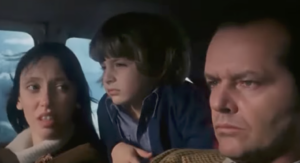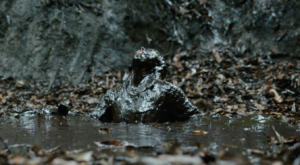
There is something almost quaint, now, about the Universal Monsters. You know, a kind of haunted house that’s been renovated so many times you half expect the ghosts to start paying rent. For nearly a century, they’ve been shuffling and snarling across screens. Dracula with his erotic dentistry, The Wolfman offering what could generously be described as full-body hairy affection, and that damp overachiever, Creature from the Black Lagoon, who never asked for swimming lessons but got them anyway. And then there’s The Mummy, arguably the least threatening of the bunch, a villain whose primary skill set appears to be walking slowly and looming with intent.
Which is to say, no one was particularly clamoring for him to get mean. Enter Lee Cronin, who has apparently looked at this dusty, bandaged relic and thought, “What if this thing scared the absolute shit out of people?” His The Mummy is not the wisecracking romp of Brendan Fraser dodging curses with a grin, nor is it the glossy, confused sprint of Tom Cruise behaving as though he wandered in from a Mission: Impossible set. It certainly isn’t the delirious fever dream of Bubba Ho-Tep, where Bruce Campbell insists he’s Elvis Presley and fights a mummy between naps.
No, this one is a mean son-of-a-bitch.
Cronin, who previously turned a high-rise apartment into a blood-soaked carnival ride in Evil Dead Rise, pushes things several limbs further here. What begins, almost suspiciously, like a family comedy that is snappy, recognizable, and even warm, slowly curdles into something far more sinister. The Cannon family, led by Charlie (Jack Reynor) and Larissa (Laia Costa), feels disarmingly real at first, trading jokes that sound like they were overheard rather than written. It’s a trick as old as The Exorcist, lull the audience into comfort, then rip the floorboards out from under them.
And rip, Cronin does.
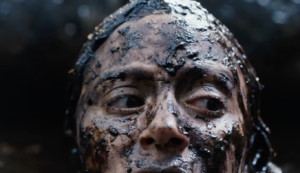
The film pivots on a kidnapping in Egypt, a return, and the quiet, dreadful realization that something is very, very fucking wrong. This is not a story about a linen-wrapped antique skulking behind doors. No, it’s about possession, rot, and the grotesque elasticity of the human body when horror decides to move in permanently. There are scenes, one involving toenails, another involving a tongue, that feel less like set pieces and more like dares. You can practically sense Cronin asking the audience, “You still with me?” and then answering himself by turning the screw anyway.
The infamous unwrapping, the long, ceremonial staple of mummy lore, is here transformed into something so viciously conceived that it borders on confrontational. It’s the kind of moment that separates the tourists from the true believers. Some will look away, others (myself included) might find themselves cheering like maniacs, grateful that someone finally had the nerve to go this hard.
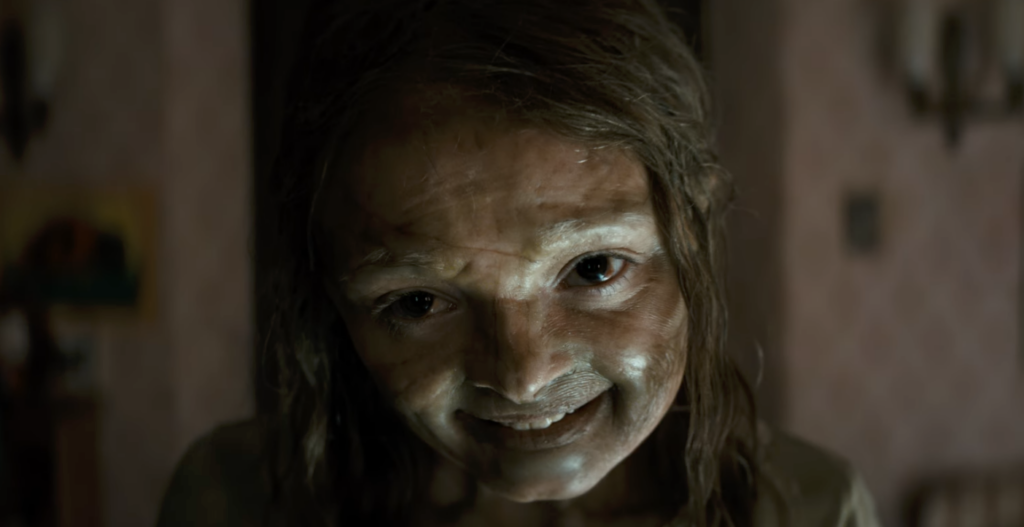
To his credit, Cronin doesn’t abandon coherence in favor of carnage. The mythology is surprisingly well-articulated, and the rules firm enough to keep the film from collapsing into parody, which is a fate that has claimed many of this monster’s previous outings. Reynor grounds the chaos with a performance that feels authentically paternal, which is confused, desperate, and stubbornly hopeful in the face of mounting evidence that hope is a losing game. But the film belongs, body and soul, to Natalie Grace, whose transformation as Katie is both exquisitely controlled and deeply unsettling. It’s the kind of performance that makes you sit up a little straighter, as if the movie has suddenly decided to watch you back.
By the end, Lee Cronin’s The Mummy doesn’t just revive an old monster, it drags the entire Universal Monsters catalogue into a dark alley, kicks it squarely in the nuts, decks it in the face, gives it the finger, and tells it, with admirable clarity, to eat shit and die. It is, in short, a fantastic horror film. It’s vicious, excessive, and alive in all the ways that matter. One hopes the others are taking notes.