There are films you recommend to friends, and then there are films you hesitate to recommend because doing so feels like assigning homework. Barry Lyndon has spent the better part of fifty years trapped in that peculiar limbo. Mention Stanley Kubrick and people immediately summon the usual suspects like 2001: A Space Odyssey, A Clockwork Orange, and The Shining. Those films arrive in conversation like celebrities entering a restaurant. Barry Lyndon slips in through the kitchen, quietly sits in the corner, and somehow ends up being the most fascinating person in the room.
Released in the strange, luxurious stretch between A Clockwork Orange and The Shining, Kubrick’s 187-minute adaptation of William Makepeace Thackeray’s The Luck of Barry Lyndon feels almost rebellious in retrospect. Imagine following one of cinema’s most provocative dystopias not with another exercise in shock, but with an eighteenth-century costume drama that unfolds at the pace of continental drift. It was as if Kubrick looked at the audience’s expectations, politely nodded, and wandered off into a comical art museum. The miracle is that he returned with one of the most breathtaking films ever made.
People often describe Barry Lyndon as “beautiful,” but that word has become so overused it now carries all the emotional weight of describing the Pacific Ocean as “kind of wet.” Beauty suggests decoration. Kubrick was after something stranger. Every frame resembles an oil painting that accidentally learned how to breathe. Landscapes don’t simply exist here. They inhale. Candlelight doesn’t illuminate rooms so much as negotiate with the darkness. Even silence seems carefully arranged by the iconic filmmaker.
Watching Barry Lyndon has always felt less like viewing a movie than wandering through the Louvre after everyone else has gone home. You stop moving because every composition demands another glance. Then another. Then suddenly, ten minutes have disappeared because you’ve become emotionally invested in the placement of a tree.
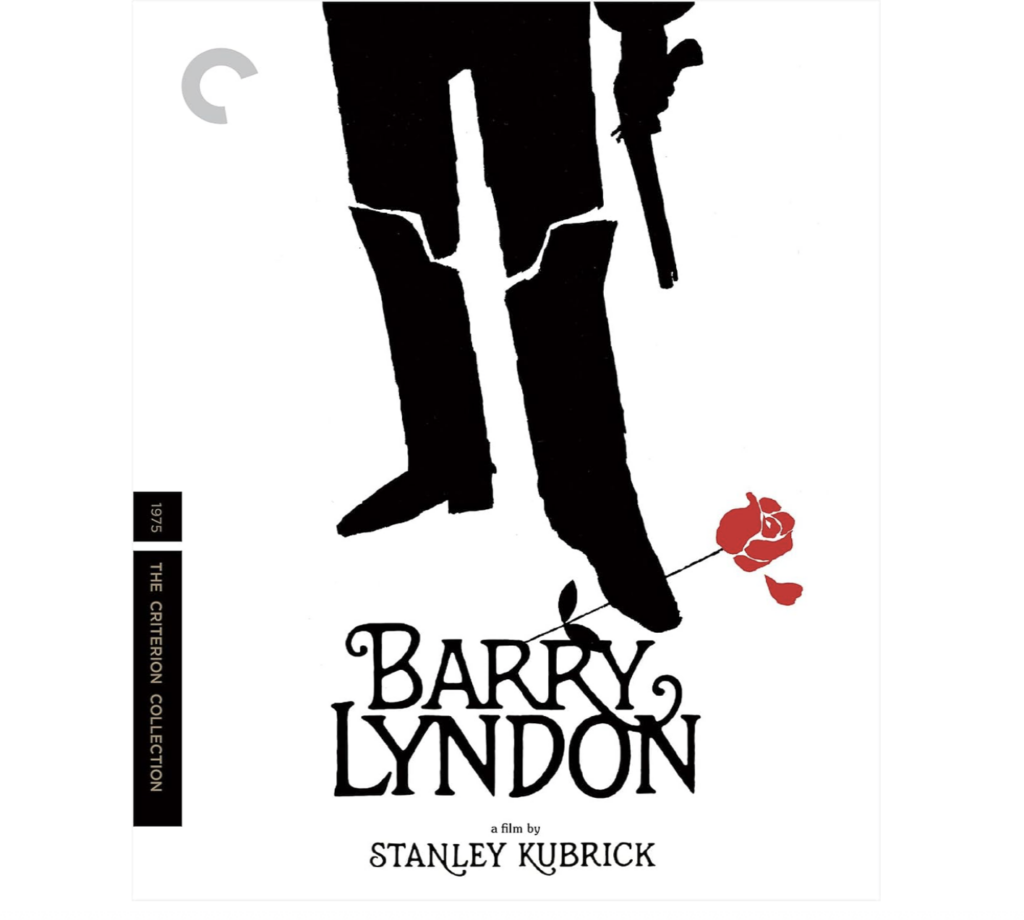
Criterion’s new restoration doesn’t merely preserve that experience, but rather, it resurrects it. Sourced from a meticulous 16-bit 4K restoration of the original 35mm negative, with Kubrick’s longtime assistant serving as the color reference, thousands of scratches, flecks of dust, warps, and blemishes have been painstakingly erased. The result isn’t a film that’s been digitally polished into artificial perfection. It’s something much more satisfying. It’s the illusion that the reels were discovered yesterday in pristine condition and projected exactly as Kubrick intended.
The colors alone are enough to make you reconsider what your television is capable of. The crimson military uniforms possess a richness that borders on theatrical arrogance, refusing to disappear even in the film’s famously candlelit interiors. The rolling Irish countryside glows with impossibly lush greens beneath skies so vivid they almost look embarrassed by modern digital cinematography. Every embroidered thread, every weathered leather strap, and every scuffed boot suddenly has the tactile quality of something you could reach out and touch. More than once, I caught myself forgetting I was watching a movie and not eavesdropping on a Vermeer.
Of course, those candlelit scenes remain the headline attraction. Kubrick famously used specially modified NASA lenses to photograph interiors using only natural candlelight, which is a sentence that somehow sounds equally like obsessive genius and a prank. Previous home-video editions hinted at the achievement. Criterion finally reveals it. Shadows retain their mystery without swallowing detail. Faces emerge gradually from the darkness, revealing wrinkles, scars, tiny imperfections, and expressions that previous releases simply couldn’t hold. The grain remains gloriously cinematic throughout, never scrubbed into digital sterility. It still looks like film because, mercifully, someone remembered that film is supposed to look like film. Which raises the eternal question: why isn’t Barry Lyndon discussed with the same reverence as Kubrick’s other masterpieces?
The obvious answer is its running time. Three hours is apparently a moral failing in an era where people willingly binge ten episodes of television over a weekend without once questioning their life choices. The slower pacing scares people off, too. Modern audiences often expect movies to sprint toward their conclusions. Barry Lyndon strolls, occasionally pausing to admire the scenery because, frankly, why wouldn’t it?
Then there’s Barry himself. Ryan O’Neal plays Redmond Barry with remarkable restraint, portraying a man who possesses all the charm necessary to ruin both his own life and everyone else’s. Barry begins as an impulsive Irish romantic after his father’s death, falls disastrously in love with his cousin, flees after a duel, stumbles into the British Army, deserts, joins the Prussians, cheats at cards, lives by deception, marries for wealth, and steadily transforms into exactly the sort of aristocratic parasite he once envied. It’s a career path that LinkedIn thankfully still doesn’t offer.
What makes Barry compelling isn’t that he’s secretly noble. He isn’t. Kubrick refuses to redeem him with convenient acts of heroism or sentimental revelations. Barry remains selfish, vain, reckless, and emotionally stunted for nearly the entire journey. And yet we cannot stop watching him. Kubrick understands that fascinating people are not necessarily admirable ones. Sometimes the greatest tragedy isn’t watching a good man fall. It’s watching an ordinary fool mistake luck for destiny until the bill inevitably arrives.
The film’s famous narrator, coolly informing us of future catastrophes long before they occur, strips away suspense and replaces it with inevitability. Every triumph already contains the seed of its collapse. Every victory carries the faint odor of failure. Kubrick isn’t interested in asking what happens next. He’s interested in asking whether human beings are capable of escaping themselves. Usually, the answer is no.
That’s what makes Barry Lyndon feel strangely modern despite its powdered wigs and embroidered waistcoats. Beneath the period costumes lies a timeless story about ambition, insecurity, social climbing, and the exhausting performance of pretending to be someone else. Barry spends the entire film chasing status, convinced that another title, another fortune, another marriage, and another victory will finally complete him. It never does. Instagram didn’t invent this disease. It merely improved the interface.
PURCHASE THE BARRY LYNDON CRITERION HERE
Then there’s the music. The Criterion release includes both the lovingly restored original LPCM 1.0 mono soundtrack and the DTS-HD MA 5.1 mix supervised years ago by Kubrick’s team, and having both feels less like a bonus than an act of respect. Purists will undoubtedly gravitate toward the mono presentation, and it’s excellent, but the 5.1 mix quietly expands the world without overwhelming it. Bach, Mozart, Schubert, Handel, and Vivaldi don’t simply accompany the film. They haunt it. The music flows through the speakers with remarkable warmth, making every ballroom, battlefield, and lonely country road feel inhabited by ghosts.
This isn’t a Michael Bay battlefield, where explosions compete for your attention like toddlers after too much birthday cake. Kubrick stages war with chilling precision. Muskets fire, men fall, silence returns, and the horror comes not from volume but from inevitability.
Criterion’s supplements finally treat Barry Lyndon with the reverence it deserves. Previous editions often felt oddly sparse, as though distributors assumed audiences would be too exhausted after three hours to care about bonus material. Criterion wisely assumes the opposite. If you’ve made it through Barry Lyndon, you’re exactly the kind of person who wants to hear every production story, every technical explanation, every obsessive detail about how Kubrick transformed eighteenth-century paintings into moving images. It’s an embarrassment of riches.
Rewatching Barry Lyndon reminded me of a peculiar truth about Kubrick. His films don’t become easier over time. They become deeper. Every viewing uncovers some new visual joke, emotional contradiction, or philosophical wrinkle hiding in plain sight. You notice a glance you missed before. A line of narration suddenly lands differently. A landscape that once seemed decorative now feels devastating. Few films reward patience so generously, and I should know. I’ve seen Army of Darkness 874 times.
Perhaps that’s why Barry Lyndon has aged so magnificently. It asks nothing fashionable of us. It doesn’t chase relevance or plead for affection. It simply waits, supremely confident that eventually we’ll catch up. Criterion has finally given this masterpiece the home-video edition it has deserved for decades. The restoration is revelatory. The audio options honor both history and modern presentation. The supplements are exhaustive without becoming academic. More importantly, the release reminds us that Barry Lyndon was never the forgotten Kubrick. We simply forgot to pay attention.
If cinema is occasionally capable of approximating fine art, then Barry Lyndon remains one of its clearest arguments. It is hypnotic, heartbreaking, frequently funny in its cruelty, and staggeringly beautiful from first frame to last. Like wandering through the world’s greatest museum, you leave exhausted, slightly overwhelmed, and convinced that you’ve only seen half of what was actually there. Some films entertain. Others endure. Barry Lyndon quietly does both.