Game of Thrones: Season 6 – Episode 5 “The Door”
There are moments in television that become so large they stop feeling like episodes and start feeling like collective emotional trauma. You remember where you were when they aired. You remember the group text messages. You remember the silence afterward. Game of Thrones specialized in this kind of cultural warfare. The show was less a television series than an international psychological experiment designed to determine how much emotional pain audiences would willingly endure for entertainment week after week. And we endured quite a bit. Heads rolled off shoulders with the regularity of Canadian snow falling. Children were tossed from towers. Weddings became mass executions. And beloved heroes disappeared so frequently that watching the opening credits felt like attending a weekly memorial service. Yet somehow, amid all the dragons, political betrayals, and alarming quantities of fur-lined capes, the series delivered its most emotionally devastating moment through a gentle giant whose vocabulary consisted entirely of one word, “Hodor.”
This was no small feat. The scale of Game of Thrones was so massive that it permanently altered what audiences expected from television. Before it arrived, fantasy on television usually meant something vaguely embarrassing involving rubber ears and syndicated reruns airing at 2 A.M. Then suddenly, HBO arrived with enough money, ambition, and Icelandic scenery to make medieval misery look prestigious. The production itself felt impossible. Entire cities were constructed. Battles looked like they had been coordinated by actual generals. And the cast ballooned into a census report. At one point, trying to explain the show to someone who had never seen it sounded like a hostage situation. It was like, “Well, there’s this silver-haired queen with dragons, an impish man who loves to drink, an assassin child, ice zombies, and everyone’s cousin has sex with each other, but trust me, it’s incredible.”
And it was incredible. What made the show work was not merely the spectacle, but the strange intimacy buried underneath all the violence. Viewers did not just watch these characters, they lived with them for years. We watched them fail, suffer, age, betray one another, and occasionally bathe, which on this show counted as a major emotional breakthrough. Characters became companions. Tyrion’s sarcasm became therapeutic. Arya’s revenge list became oddly inspirational. Jon Snow spent nearly a decade looking exhausted in the wintery weather, which felt relatable on a spiritual level. But Hodor occupied a different place entirely. He was pure-hearted in a world almost aggressively designed to punish purity.
Hodor was not ambitious. He did not crave power. He did not manipulate kingdoms or command armies. He simply carried Bran Stark on his back through forests and snowstorms with the weary patience of a parent hauling groceries up three flights of stairs. In a series overflowing with moral corruption, Hodor felt almost suspiciously kind. He was the rare character viewers never worried about betraying anyone because the man barely had enough energy to say his own name. He existed as a source of comfort, like a massive, loyal presence who seemed immune to the political poison infecting everyone else.
Which is precisely why the show chose to emotionally annihilate us with him.
The episode itself is already overflowing with major revelations. We learn about the origins of the White Walkers. Jorah Mormont continues his career as Westeros’s saddest man, hopelessly in love with Daenerys Targaryen. Jon Snow begins preparing for war against Ramsay Bolton, a man who somehow managed to make every other psychopath on the show seem charming by comparison. Yet all of these storylines eventually shrink beside the final revelation surrounding Hodor. Because the episode does not simply kill him, it rewrites his entire existence in one horrifying stroke.
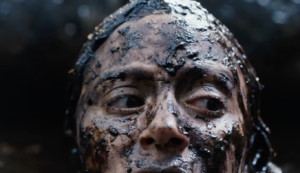
The sequence unfolds like a nightmare with the patience of poetry. Bran Stark, training under the Three-Eyed Raven, drifts through visions of the past while the Night King and his army descend upon the cave. Chaos erupts. The ice zombies attack. Skeletons claw through the earth like commuters trying to catch the last train home. Meera desperately drags Bran’s unconscious body to safety while Hodor physically holds back the advancing army. Meanwhile, Bran’s consciousness exists simultaneously in the present and the past, connected to young Wylis, the stable boy Hodor once was.
And then comes the command. “Hold the door.”
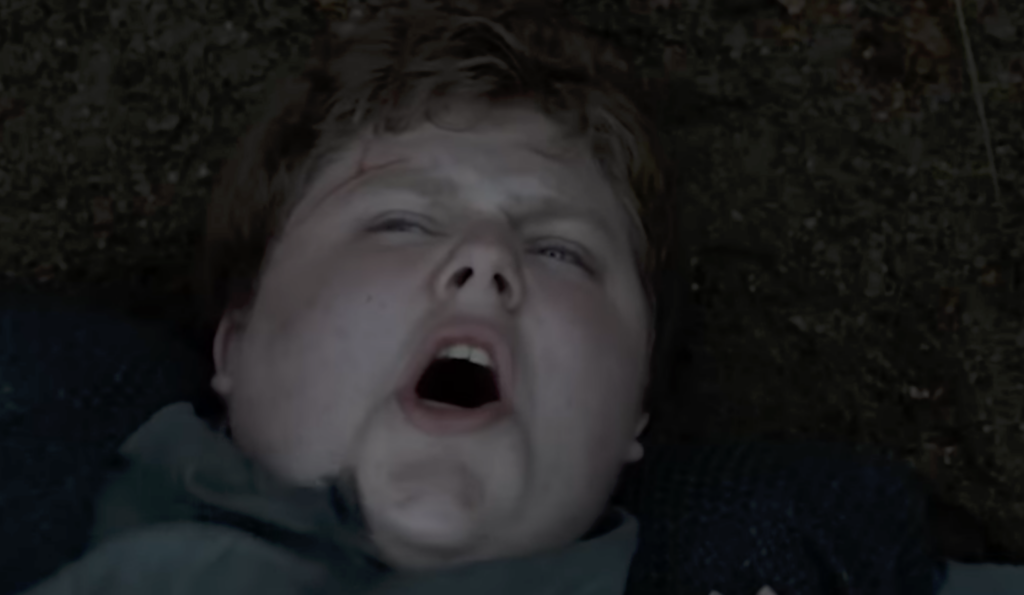
It is screamed first as instruction, then repeated as panic, then transformed into something tragic and irreversible. Bran’s psychic connection fractures young Wylis’s mind, forcing him to experience his own future death in real time. The phrase collapses in on itself, “Hold the door” becoming “Hodor.” We watch language disintegrate. We watch identity shatter. And we realize, in one awful instant, that the simple-minded giant we have known for years was not born this way at all. His entire life has been the echo of one traumatic moment stretched across decades.
It is difficult to describe how shocking this felt when it first aired. Not shocking in the usual Game of Thrones sense, where someone unexpectedly loses a head during dinner. This was something sadder and stranger. It recontextualized every previous scene involving Hodor. Every smile. Every “Hodor.” Every moment where audiences laughed affectionately at him suddenly became unbearable in retrospect. He was not comic relief. He was a man trapped inside the psychic scar tissue of his own destiny.
And then the show twists the knife further by forcing us to watch him die painfully.
As Meera drags Bran through the snow, Hodor braces himself against the door while the undead literally tear him apart. The scene is violent, terrifying, and impossibly heartbreaking because Hodor does not run. He does not fight fate. He simply does what he has always been destined to do. He holds the door. He saves his friends. And then, he dies alone in the dark while monsters consume him.
There is something almost ancient about the tragedy of it. Greek mythology operated this way with prophecies fulfilled precisely because they were unavoidable. Hodor becomes less a character than a mythic figure here. He’s a man whose entire life existed in the service of a single moment of sacrifice. The cruel beauty of the writing lies in the realization that he has carried this burden forever without ever possessing the language to explain it. His tragedy is not merely death. It is silence.
And for a show so often celebrated for its scale, this was remarkably human storytelling. There was no dragon battle, no exploding wildfire spectacle, and no massive war sequence ever landed with the same emotional precision. The scene worked because it stripped away the grandeur and focused on something painfully simple, loyalty. Hodor dies protecting Bran because that is who he is. He’s not a king, nor a warrior. He’s just a good man standing in front of a door while the end of the world crashes against him.
I remember watching the episode and sitting there afterward in complete silence, the way one does after receiving unexpectedly terrible news. Not because the death was gruesome, though it certainly was, but because it felt unfair in the way real tragedy feels unfair. Hodor never wanted anything. He asked for nothing. And in the cynical universe of Game of Thrones, where nearly every character was corrupted by power or vengeance or ego, Hodor remained decent until the very end. And perhaps that is why his death lingers more than any other. The Red Wedding was horrifying, yes, but it operated like shock theater. Hodor’s death was pure sorrow.
The series often insisted that “all men must die,” but Hodor’s death carried an additional implication in that some people spend their entire lives unknowingly preparing for sacrifice. That idea, that destiny can quietly shape a person long before they understand it, is what made the episode extraordinary. Beneath all the fantasy mythology and supernatural spectacle was a devastatingly human truth. Sometimes the kindest people carry the heaviest burdens in silence. And for one terrible, unforgettable moment, television held the door open long enough for all of us to feel it.