WWE Monday Night Raw: November 14, 2005 “Eddie Guerrero Tribute”
There are only a few moments in life when grown adults collectively forget dignity. Funerals, perhaps? The final five minutes of Pixar’s Up? And, if you grew up watching professional wrestling, the tribute episode of WWE Raw following the death of Eddie Guerrero. Yes, wrestling. You know that glorious traveling circus where men in sequins pretend to hate one another before suplexing each other through folding tables, can, on occasion, produce emotions so genuine that they sneak up on you like a steel chair to the spine. Beneath the pyrotechnics, the soap-opera betrayals, and the medically concerning amount of baby oil, there are real people in there. And every so often, the curtain slips.
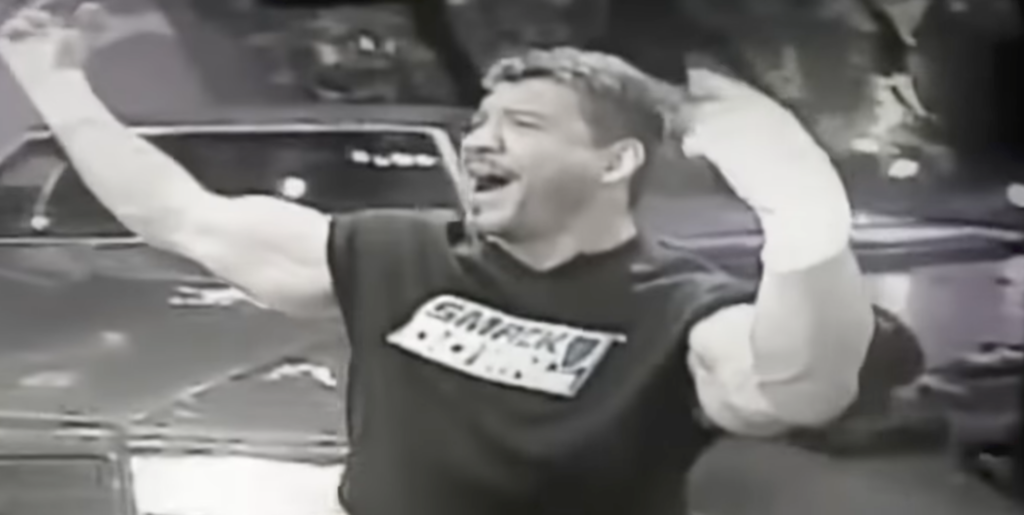
When Eddie Guerrero died on November 13, 2005, from heart failure related to underlying cardiovascular disease, it felt less like the passing of a wrestler and more like the loss of a favorite uncle. You know, the funny one who taught you bad habits and somehow got away with everything, like lying, cheating, and stealing. Eddie was magnetic in and out of the ring. He was equal parts con man, artist, comedian, and virtuoso athlete. He could make cheating feel noble. He could turn a wink into Shakespeare. “Lie, Cheat, and Steal” was not merely a catchphrase, as it was practically a philosophy of joy. Fans adored him because he wrestled like someone who knew life was fragile and decided to have fun anyway.
The following night, WWE Raw abandoned its usual nonsense of revenge plots and championship feuds and became something startlingly human. Every wrestler stood shoulder to shoulder at the top of the entrance ramp as the ten-bell salute rang through the arena, which is an old wrestling tradition that somehow lands harder than church bells. Then came the montage with Eddie grinning, Eddie flying through the air, and Eddie hugging friends backstage, all while Johnny Cash’s version of “Hurt” played over the footage like a national elegy for broken cowboys. It was devastating television. Not “television devastating,” where someone gets voted off an island, but genuinely devastating. It was mascara-smearing, call-your-brother devastating.
The strangest thing about wrestling is that its performers spend years convincing us they are indestructible. They survive ladder matches, thumbtacks, cages, flaming tables, and whatever else executives dream up after too much cocaine. But grief does not care about storylines. Throughout the night, wrestlers sat for interviews to say goodbye to Eddie, and one by one, the armor cracked. Stephanie McMahon fought through tears. John Cena looked suddenly young and shaken. Kurt Angle could barely compose himself. Rey Mysterio spoke like a man trying to hold together a collapsing bridge before he took his mask off.
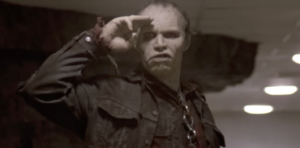
But it was Chris Benoit who remains impossible to forget in that moment, before history would later render his name radioactive and unbearably tragic. At the time, he was simply Eddie’s best friend, sitting in front of a camera and discovering, in real time, that grief had stolen language from him. He tried to speak and instead dissolved into sobs. Not cinematic crying. Not performative crying. But the kind of crying that embarrasses you because it is too naked and too honest. Watching it felt invasive and deeply intimate all at once, as though millions of viewers had accidentally wandered into a private mourning.
I still miss Eddie Guerrero, which is a ridiculous sentence in some ways because I never knew him. Most of us didn’t. But that is the peculiar magic of wrestling. For decades, these performers entered our living rooms every week wearing costumes large enough to hide entire lives inside them. Then, one terrible night in 2005, all the costumes fell away. And for a few hours, amid the body slams and championship belts, professional wrestling stopped pretending to be fake and became painfully, unmistakably real. “Viva La Raza.”