In the homoerotic sandy beachesof film podcasts, where opinions arrive vacuum-sealed and pre-approved by Letterboxd disciples who say “actually” the way sommeliers say “oak-forward,” there floats a strange and likable little vessel called Fear and Loathing in Cinema Podcast. It is less a podcast than a late-night booth at a diner where the mozzarella sticks have gone cold, the coffee has achieved sentience, and nobody particularly cares who wins the argument so long as the argument remains entertaining.
The show traffics in the usual pleasures of movie obsession. There’s nostalgia, critique, and the occasional unnecessary defense of a sequel no jury would acquit. But its real talent lies in what might be called the affectionate autopsy. Films once left for dead are dragged back onto the slab, not to be mocked exactly, but reconsidered with the squinting tenderness usually reserved for old tattoos and high-school yearbook photos. Was it bad? Certainly. Was it perhaps interestingly bad? Now we’re talking. The podcast understands that cinema history is littered with glorious disasters, and sometimes the wreckage is more revealing than the masterpiece.
At the center of it all is a quartet with the chemistry of a dinner party that somehow survives both politics and tequila. Bryan Kluger hosts with the relaxed confidence of a man who has willingly walked into a burning theater because he heard the third act gets weird. Dan Moran approaches plot holes like a litigator cross-examining an unreliable witness. Preston Barta mounts passionate defenses for cinematic lost causes with the zeal of a public defender representing Waterworld. And Chelsea Nicole, whose observations often land with surgical precision, has a gift for reminding everyone that horror movies are usually less about monsters than the deeply bizarre choices humans make while near monsters. Together, they’ve stumbled into that rare territory where criticism still has a pulse, humor still has a brain, and loving movies means occasionally putting them, and yourself, on trial.
There are movies, and then there are films that feel less like cinema and more like a national mood disorder. Top Gun is one of those miracles of American excess. It’s a two-hour gay romp where emotionally unavailable men in bomber jackets play volleyball with the intensity of medieval warriors preparing for battle. Watching it now feels like discovering a time capsule buried beneath a Gold’s Gym in 1986 with sweat, aviator sunglasses, unresolved daddy issues, and the distinct smell of aerosol hairspray.
On Episode #160 of the Fear and Loathing in Cinema podcast, Bryan, Preston, and Dan descend into the beautiful chaos of Reagan-era action mythology, unpacking why every hero in the ’80s looked like he survived entirely on black coffee, Marlboros, and trauma. They discuss how Maverick belongs to that glorious lineage of cinematic lunatics, somewhere between John McClane and Martin Riggs. You know, men who absolutely should not have been handed firearms, much less fighter jets, yet were treated by Hollywood as spiritual guides for American masculinity.
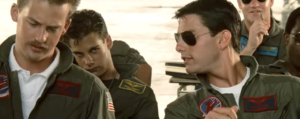
Of course, no conversation about Top Gun can avoid the elephant in the locker room, that this may be the most accidentally homoerotic blockbuster ever made. Or perhaps “accidentally” is giving everyone too much credit. Bryan, Preston, and Dan deep dive into the mythology of the volleyball scene, where glistening men grunt, flex, and maintain eye contact with the intensity of a Tennessee Williams play scored by Kenny Loggins. Every frame of the movie feels one saxophone solo away from softcore cinema. Maverick and Charlie may technically be the central romance, but the film’s true emotional engine has always been Maverick’s desperate need for validation from Iceman, who wields judgment with the terrifying precision of a Catholic school principal.
The podcast hilariously examines how this hyper-masculine military fantasy accidentally became one of the queerest mainstream films of the decade, proving once and for all that nothing says “straight action movie” quite like shirtless beach sports filmed in golden-hour lighting.
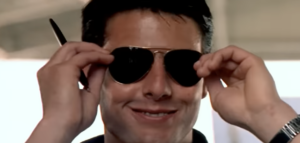
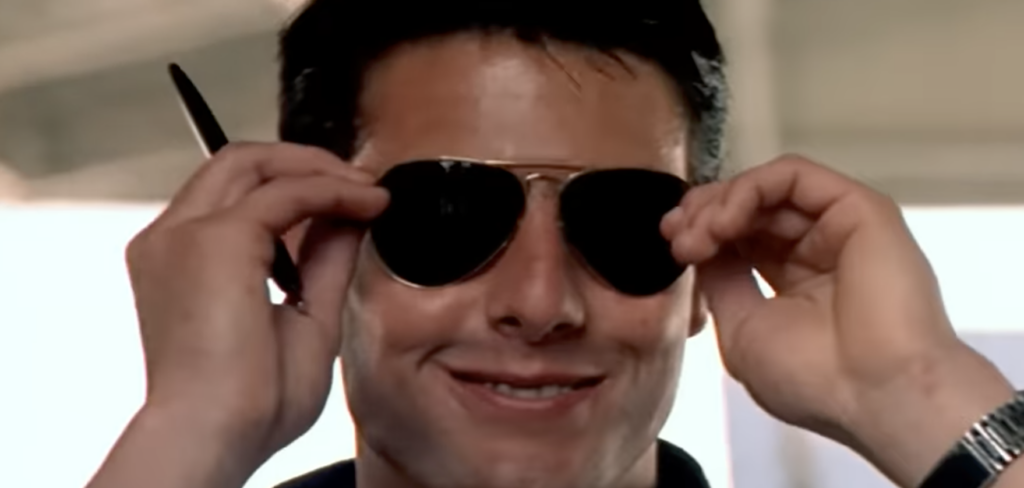
But perhaps the funniest revelation, nearly forty years later, is that Iceman was right about everything. Maverick is less “cool rebel” and more “HR violation with cheekbones.” The gang explores why audiences initially embraced Maverick’s recklessness as aspirational and why modern viewers increasingly watch the film like exhausted middle managers observing a coworker who definitely ignores Slack messages marked urgent. They also examine why some people don’t like the movie at all. Like the propaganda sheen, the cartoon patriotism, and the emotional repression disguised as depth, and the MTV editing style that moves with the subtlety of someone shotgunning six Red Bulls inside an editing bay. Yet even its critics can’t escape the gravitational pull of Tom Cruise grinning like a man who already hears his own soundtrack. Before Top Gun, Cruise was a movie star. After it, he became an infrastructure for every male moviegoer.
Listen to the podcast everywhere.
FEAR AND LOATHING PODCAST APPLE PODCASTS
FEAR AND LOATHING PODCAST SPOTIFY
Thank you for listening.
WRITTEN BY: BRYAN KLUGER
Bryan Kluger is an entertainment critic, writer, and podcast host with a deep love for film, horror, and pop culture. His work has appeared in outlets such as Arts+Culture Magazine, High-Def Digest, Screen Rant, The Huffington Post, The Drudge Report, Fark, and Boomstick Comics. He hosts My Bloody Podcast and Fear and Loathing in Cinema Podcast, along with a weekly radio show, where he brings sharp insight, humor, and an unabashed passion for movies to every conversation.
Podcast: Play in new window | Download
Subscribe: RSS