What exactly is an action movie in 2026? Is it still a film where people punch each other through walls, leap from moving vehicles, and bleed with conviction? Or is it now a two-and-a-half-hour group-therapy session in which a protagonist and antagonist spend most of their runtime unpacking childhood trauma before reluctantly throwing a single punch during the final act?
The modern action landscape often feels divided between half-billion-dollar superhero spectacles and whatever project Jason Statham agreed to while finishing his breakfast. Which is why watching The Furious feels less like discovering a new movie and more like finding a lost VHS tape from a parallel universe where the 1990’s never ended.
I miss that era. Action movies were brutal, ridiculous, occasionally homoerotic in ways nobody acknowledged, and gloriously unconcerned with subtlety. Men were thrown through glass. Villains wore leather for no practical reason. And nobody paused a fight to discuss emotional boundaries.
Years ago, XYZ Films helped introduce American audiences to The Raid and The Raid 2, two Indonesian masterpieces that made much of Hollywood’s martial-arts filmmaking look like children slapping each other with pool noodles. Those films combined bone-crushing choreography with genuine storytelling, raising the bar so high that most action movies have spent the last decade unsuccessfully trying to jump over it.
Now comes The Furious, directed by Kenji Tanigaki, whose résumé includes the delightfully absurd Enter the Fat Dragon, which is a title that somehow manages to be both self-explanatory and impossible to explain. This time, however, Tanigaki has made something entirely different and is the most exhilarating action film since The Raid franchise itself.
Like Sam Raimi moving from The Evil Dead to Evil Dead II, Tanigaki understands that extreme violence and humor are not opposites, but rather, they are dance partners. The film centers on a mute father, played by Xie Miao, and his daughter Rainy (Yang Enyou), who are still struggling after the death of her mother. When Rainy is kidnapped by a criminal network trafficking children, her father embarks on a relentless search that brings him together with Navin (Joe Taslim), whose journalist wife disappeared while investigating the same crimes.
The subject matter is genuinely horrific. Children are kidnapped, exploited, brutalized, and viciously killed. Yet Tanigaki somehow threads humor through the darkness without trivializing any of it. The secret is that the children themselves are resourceful, resilient, and often surprisingly formidable. They are not passive victims waiting for rescue. Instead, they become active participants in their own survival.
Then there are the fights. Good Lord, all of the fights.
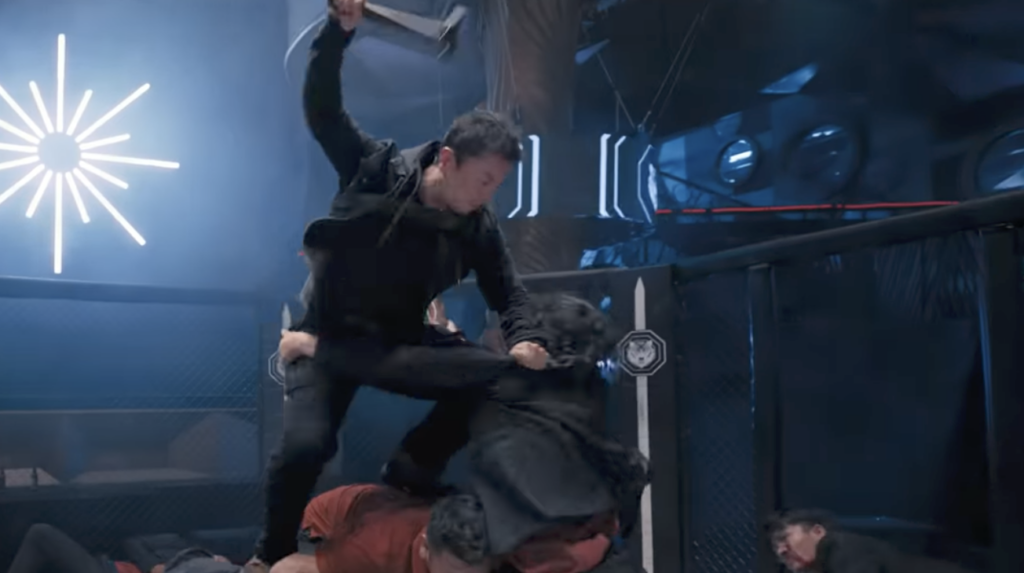
Every punch lands with the force of a car accident. Every bone break feels personal. And Tanigaki shoots action the way too few directors do today, he simply lets us see it. There are no frantic edits attempting to disguise choreography. There are no camera movements that suggest the cinematographer is fleeing the scene. The action breathes. The performers do the work, and the camera respectfully records the carnage.
And yet The Furious never takes itself too seriously. Its villains often feel ripped straight from the action films of my youth, which were larger-than-life lunatics who absorb impossible amounts of punishment while delivering dialogue so ridiculous it inspires both laughter and applause.
The film’s secret weapon, however, is Yayan Ruhian, forever remembered by action fans as one of the most terrifying human beings to emerge from The Raid franchise. Here he enters the movie like a deranged version of Legolas from The Lord of the Rings, wielding a bow that appears larger than his entire body. He stalks through the film launching arrows with supernatural precision, turning every appearance into a combination of fantasy epic, martial-arts movie, and violent ’90s film. It is simultaneously hilarious and horrifying.
What impressed me most, though, was how much agency the children are given. In lesser films, kids exist mainly to be rescued. Here, they adapt, fight back, improvise, and survive. Their presence elevates the story rather than merely motivating it.
By the time The Furious reaches its final stretch, it has become something increasingly rare. It’s an action movie that remembers action is supposed to be fun. Not ironic fun. Not self-aware fun. But actual, stand-up-and-cheer fun. The kind of movie that turns a theater full of strangers into temporary best friends united by the sight of someone getting a giant arrow shot through their face, and then their own arm butchered off.
When the credits rolled, I felt the same exhilaration I used to feel leaving action movies as a teenager. I was slightly exhausted, mildly deaf, and convinced I could fight six men at once despite overwhelming evidence to the contrary. All hail The Furious. Action movies may not be dead after all.