
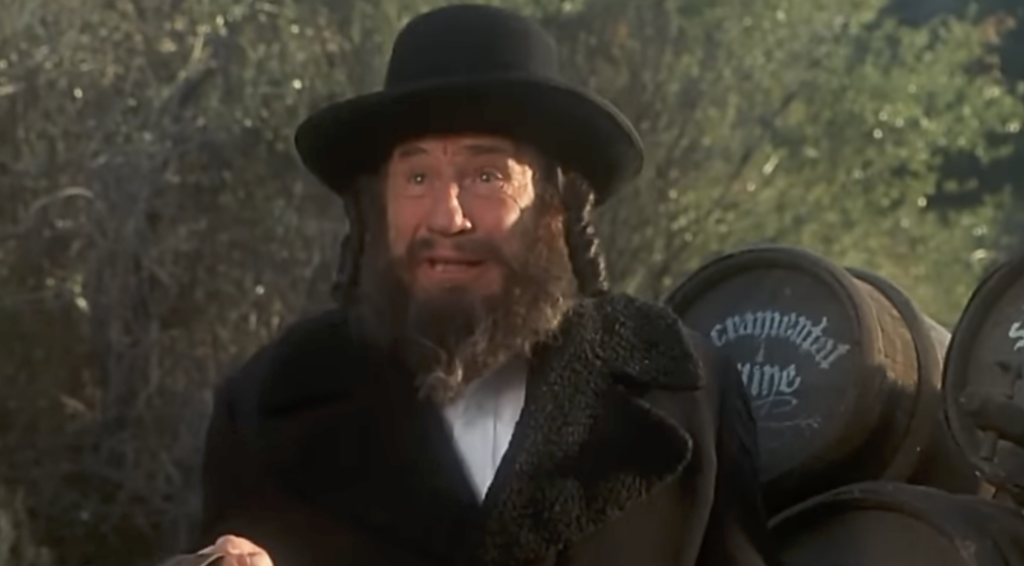
There are many things about being Jewish that I have learned to live with over the course of my life. The traditions, the prayers, the holidays, the family gatherings, the occasional existential crisis disguised as a dinner conversation. There is Yom Kippur, with its long hours of fasting and introspection, and there is gefilte fish, which has inspired a level of spiritual questioning that no rabbi has ever adequately addressed. There is the history, the humor, the music, the food, the arguments, and the particular Jewish talent for turning a simple question into a three-hour discussion about whether the question itself was properly phrased.
I have never found any of that particularly difficult. What has become difficult, especially in 2026, is being Jewish in a world where the hatred of Jews seems to have found an alarming number of new microphones. I have spent most of my adult life in the entertainment industry. I have worked as a producer, writer, husky model, actor, and director of award-winning television. Later in life, I also became a film critic who has watched thousands of movies and interviewed hundreds of actors, filmmakers, musicians, and other people who have made a living pretending to be someone else. I have spent years discussing cinema, pop culture, horror movies, and the curious human instinct to pay twenty dollars to sit in a dark room and watch someone get disemboweled by a maniac with a gardening tool. It is a wonderful business, occasionally a ridiculous one, and one that I have loved for much of my life.
But lately, it has become increasingly difficult to separate the things I love about the entertainment world from the things that have made me feel profoundly unwelcome in it. I have watched people I once admired use their enormous platforms to speak about Israel, the Palestinians, and the war in Gaza with a confidence that often seems inversely proportional to their knowledge of the subject. I have watched the word genocide become a social-media slogan, deployed with the sort of certainty usually reserved for announcing that a movie has a post-credits scene. I have watched conversations about the Middle East become opportunities for celebrities to demonstrate their moral credentials to millions of followers, many of whom may know as little about the history of the region as the people they are applauding.
And I have watched Jewish people become increasingly isolated in conversations that are supposedly about compassion, human rights, and inclusion. I know what some people will say. They will say that criticism of Israel is not antisemitism. And they are right. Criticism of a government, its leaders, its military decisions, or its policies is not inherently hatred of Jews. It is possible to oppose Israeli government actions while caring deeply about Jewish people. It is possible to mourn Palestinian civilians, demand humanitarian assistance, and believe that Palestinians deserve dignity and self-determination while also recognizing the historical vulnerability of the Jewish people. These things should not be mutually exclusive.
But there is a difference between criticizing a government and treating Jewish people everywhere as collectively responsible for its actions. There is a difference between advocating for Palestinian rights and celebrating violence against Jews. There is a difference between questioning the decisions of an Israeli prime minister and suggesting that your Jewish neighbor, your Jewish colleague, or your Jewish friend must answer for them. And there is a difference between being politically engaged and casually repeating claims that you have not taken the time to understand. That distinction seems to have become increasingly difficult for some people to make.
For me, the issue is no longer simply something I encounter on television or read on my phone while waiting for a podcast meeting to begin. It has become personal. It has entered my friendships, my professional life, and the places where I once felt most comfortable, like a certain film festival called Fantastic Fest. It has made me question relationships that I thought were built to withstand considerably more than an argument over a geopolitical conflict.
Over the past year, I have lost some very dear friends. Not acquaintances, and not people whose names I recognize because we once exchanged complimentary drinks at a film festival. I mean real friends. People I have known for years. These are people with whom I have shared meals, stories, laughter, memories, and enough private conversations to fill several seasons of a prestige television drama. These are people who knew me before the latest political argument became the defining feature of every social interaction. These are people who knew my sense of humor, my work, my family, my obsessions, and the fact that I can turn virtually any conversation into one about a horror movie.
And somewhere along the way, our friendships became casualties of a conversation that neither of us seemed able to have without everything else getting dragged into it. I understand that people have different political beliefs. I understand that friends can disagree about war, religion, history, and the responsibilities of governments. I have never expected everyone I know to share my opinions. If that were the requirement for friendship, I would have approximately three friends, and one of them would probably be a fictional character from The Texas Chainsaw Massacre.
What I have struggled with is the willingness of people I love to accept sweeping claims about Jews and Israel while showing so little curiosity about the people those claims affect. I have struggled with the ease with which some friends have dismissed Jewish fears, Jewish history, and Jewish grief. I have struggled with the feeling that, in certain rooms, I am expected to explain myself before I am allowed to speak. And I have struggled with the realization that someone can know you for years and still somehow fail to understand what it means when you tell them that something hurts. There is a particular loneliness in discovering that a friendship you believed was unconditional may have been conditional on your remaining silent about a part of yourself. I do not need every friend to agree with me. I need them to care enough to listen. That should not be an extraordinary request.
The events of October 7, 2023, changed the way I experienced the world. The Hamas-led attacks on Israel killed approximately 1,200 people, according to Israeli authorities, and 251 people were taken hostage. Families were shattered. Children were murdered. Survivors were left with memories that no amount of time can simply erase. For Jewish people around the world, the attacks carried a particular historical weight. The largest massacre of Jews since the Holocaust was not an abstract historical reference. It was happening in real time, on our phones, in our homes, in our conversations, and in the lives of people whose names we were learning as the news unfolded.
I remember the shock. I remember the horror. I remember the feeling that something had broken in the world, followed almost immediately by the strange sensation that the world was already preparing to move on. And I remember how quickly the conversation became complicated. The suffering of Palestinian civilians in Gaza is real, and their lives matter. The destruction, displacement, hunger, grief, and trauma experienced by civilians are not things that should be brushed aside. But neither should the suffering of Israeli civilians become less important because they are Israeli or Jewish. I have found myself asking why so many people seem capable of holding one of these truths while treating the other as an inconvenience.
The word genocide has become central to the public debate about Gaza. It is a grave legal term, not simply a synonym for a terrible war or an enormous civilian death toll. The Genocide Convention, it involves certain prohibited acts committed with the specific intent to destroy, in whole or in part, a national, ethnic, racial, or religious group. Whether that legal standard has been met in a particular conflict requires examination of evidence, intent, and applicable law. It is not something that can be conclusively settled by a celebrity’s Instagram post, a television monologue, or a trending hashtag.
I have strong feelings about the accusations directed at Israel. I have also come to understand that the legal and factual questions surrounding this war are complex and contested, and that the people who bear the consequences of the conflict are not served by reducing their lives to slogans. What I cannot accept is the notion that the Jewish people, as a whole, are responsible for the decisions of the Israeli government. I cannot accept that the existence of Israel makes every Jew a legitimate target for suspicion or hostility. And I cannot accept that the massacre of Jewish civilians on October 7 can be treated as an unfortunate footnote in a conversation about the Middle East.
Hamas’s attacks were not justified by the suffering of Palestinians. The suffering of Palestinians does not justify antisemitism. And the suffering of Israelis does not justify indifference to Palestinian lives. These truths can coexist. They must. But in the world of social media, nuance is often treated like a defective product. It does not travel well. It does not generate the same immediate rush of applause as a declaration of absolute certainty. It asks people to sit with discomfort, to learn something, to admit that the world is more complicated than the captions beneath their favorite celebrity’s photographs. And that, apparently, is asking a great deal.
There is something profoundly unsettling about hearing people announce, with the conviction of a fire-and-brimstone preacher and the subtlety of a car alarm, that they want every Jew dead and Israel erased from the map, only to watch the same people turn around and accuse Israel of the very intentions they have so enthusiastically advertised themselves. I have spent enough time in the media business to know that repetition can make almost anything sound like received wisdom, but repetition does not make a lie true, and outrage is not a substitute for history. Yes, there has been a war in Gaza. Yes, people have died, including thousands of innocent civilians whose lives were never theirs to lose.
That is the horror of war, a horror that has followed humanity from the Crusades to Operation Desert Storm and, apparently, into every new century we insist on calling more enlightened than the last. But there is a difference between the devastation of war and the deliberate destruction of a people, and that distinction matters enormously. And just to reiterate, Israel launched its military campaign after the October 7th massacre, when Hamas terrorists murdered approximately 1,200 people in Israel and took 251 hostages. Hamas, which governs Gaza, is not some misunderstood neighborhood association with an unfortunate public-relations problem. It is a terrorist organization whose founding charter called for Israel’s destruction and whose leaders have repeatedly embraced violence against Jews. Israel has a right to exist, and its citizens have a right to live without the prospect of being slaughtered in their homes.
And then there are the numbers, which deserve more than a slogan tossed across a protest sign or a television panel. By the figures cited in this argument, the war in Gaza had taken fewer than 60,000 Palestinian lives, which is less than three per cent of Gaza’s population. Those figures, even if accepted, cannot by themselves settle whether genocide has occurred. Again, genocide is a legal determination involving specific intent to destroy a protected group, in whole or in part, not a mathematical threshold at which the dead suddenly become more or less human. But history offers us a terrible, unmistakable point of comparison. Before the Second World War, Poland was home to approximately 3.3 million Jews. And after the Holocaust, only a small fraction remained, with roughly 40,000 Jewish survivors living there in the immediate postwar years.
That was the systematic annihilation of a people, carried out with the explicit purpose of erasing Jewish life from Europe. That is genocide. And as a Jew, I find it both heartbreaking and infuriating that the word has become so casually weaponized that its history can be flattened into a political talking point, stripped of the very specificity that gives it meaning. I think about the millions of people who were murdered simply because they were Jewish, about the families whose names and photographs survived when they did not, and about how astonishingly little time has passed since the world tried to make Jewish existence disappear. I think about Israel, not as a government beyond criticism, not as a country incapable of wrongdoing, but as a homeland whose existence is inseparable from that history.
I have always believed that celebrities have a right to speak about the world. Actors, musicians, writers, and filmmakers are citizens. They are entitled to their political opinions, their convictions, and their concerns. Their professions do not disqualify them from participating in public life. But having a platform is not the same thing as having expertise. And having millions of followers does not magically transform a person into a historian, a diplomat, a military analyst, or an international lawyer. This is where my frustration with the entertainment industry becomes particularly acute.
I have spent years interviewing actors and filmmakers about their work. I have sat across from people whose performances I admired, people whose films had changed the way I thought about cinema, and people who had made me laugh so hard that I briefly forgot I was supposed to be asking them questions for a living. I know how much work goes into making a movie. I know how many people it takes to bring a story to the screen. I know the long hours, the arguments, the compromises, the exhaustion, and the small miracles that make filmmaking possible.
I also know that being excellent at pretending to be a doctor does not make you a doctor, or that being excellent at playing a detective does not make you a detective. And playing a superhero does not grant you special access to the history of the Middle East. Yet we have reached a point where a celebrity can make an emphatic statement about one of the most complicated conflicts in modern history, and an enormous audience will receive it as though it has arrived from a distinguished academic journal. I find this both troubling and, in certain circumstances, unintentionally hilarious.
The entertainment business has always had a complicated relationship with self-importance. It is an industry built around make-believe, but it can sometimes develop a remarkably serious attitude about its own moral authority. A person can spend twenty years pretending to be a fictional giant green monster and then discover, somewhere between a press junket and a podcast appearance, that they are now uniquely qualified to explain the geopolitical architecture of the Middle East. The transition is apparently seamless. One minute, you’re in a cape and tights on the big screen. Next, you’re explaining international law to millions of people who have never read a book about it. And if anyone questions your expertise, you can always accuse them of being on the wrong side of history.
I have watched this dynamic play out with celebrities whose work I have enjoyed, and it has left me with a feeling that is difficult to describe. It is not simply anger. It is disappointment. It is the sadness of watching people whose talent you admire use their influence in ways that seem careless toward the very people they claim to care about. Some of the loudest voices have been actors and musicians whose political commentary has become a regular feature of their public identities. Some have made sweeping statements about Israel. Some have used language that many Jewish people, myself included, have found deeply alienating. Others have made claims about the conflict that deserve scrutiny rather than automatic acceptance. And some have treated the entire subject as an opportunity to display their moral superiority.
I keep thinking about how strange it is that an industry that spends so much time celebrating diversity and inclusion can sometimes become so unwilling to accommodate Jewish people who express fear, grief, or disagreement. The entertainment industry is capable of extraordinary empathy. It can make millions of people cry over a fictional character. It can create a sense of shared humanity across languages, borders, and generations. But empathy becomes a much less impressive achievement when it is extended only to people whose experiences fit the prevailing narrative.
The recent controversy surrounding Melissa Barrera and the Scream franchise has become one of those cultural flashpoints that reveals how differently people can interpret the same events. Barrera was removed from the franchise following social-media posts about the war in Gaza that her studio, Spyglass Media Group, characterized as antisemitic. Barrera and her supporters disputed the characterization, and the controversy became part of a wider debate about political speech, artistic freedom, antisemitism, and the responsibilities of studios.
There is something almost Shakespearean about watching celebrities, including some Jewish ones, leap onto the latest fashionable bandwagon, apparently mistaking public condemnation for intellectual rigor. Hannah Einbinder, Javier Bardem, and Mark Ruffalo have all made their views on Israel known, while Macklemore, and Ed Sheeran have recently joined the conversation, producing a cast of characters that sounds less like a geopolitical roundtable than a deleted scene from the film Idiocracy. They all now apparently have thoughts on the Middle East that demand our attention. What astonishes me isn’t that actors and musicians have political opinions. Of course, they’re entitled to them, as we all are. It’s the extraordinary confidence with which some pronounce judgment on a conflict of almost incomprehensible complexity, as though a few Instagram posts and a celebrity-sized megaphone constitute a graduate degree in history.
As someone who works in entertainment, I know the intoxicating appeal of being part of the cultural conversation. But somewhere between the red carpet and the recording studio, a troubling number of people seem to have confused moral conviction with actual knowledge. You can be a talented actor, a successful musician, or a very committed superhero without becoming an authority on Israel, Hamas, or the Jewish people. And when the subject is antisemitism, war, and the safety of millions, the stakes are rather higher than winning applause from your followers. Speak up, by all means. Just do the reading first.
I have my own views about the situation. I also recognize that people can disagree about whether particular statements cross the line from criticism of Israel into antisemitism, and that the distinction requires examining the actual language and context rather than simply declaring a winner. What has troubled me is the way the controversy has continued to evolve into a loyalty test. For some people, supporting Barrera has become a statement of solidarity with Palestinians. For others, the studio’s decision has been understood as a response to rhetoric they believe crossed a line. And for still others, the controversy has become another opportunity to demonstrate that their politics are more righteous than someone else’s.
Then came Matthew Lillard, the actor. Lillard is an actor whose career has intersected with some of the movies I have loved. He is Shaggy in the live-action Scooby-Doo films, a member of the Scream family, and a performer whose work has earned him a devoted following. He has also been at the center of a separate entertainment-industry controversy after Quentin Tarantino publicly criticized him. I have watched Lillard’s career with interest, and I have enjoyed his work. Which is precisely why his comments about the Scream controversy struck me so personally.
Lillard publicly expressed regret about participating in the latest Scream film because of the studio’s treatment of Barrera, aligning himself with her position in the dispute. I understand that actors can have moral objections to the decisions of the studios that employ them. I understand that people can reconsider their participation in a project after learning more about the circumstances surrounding it. And I understand that Lillard, like anyone else, is entitled to his views. But I found myself asking a question that has followed me throughout this entire experience: How much do we really know about the things we speak about with such certainty?
I have spent years interviewing actors. I have interviewed filmmakers whose work I admire, musicians whose songs have soundtracked my life, and people who have created characters that have stayed with me long after the credits rolled. I know how easy it is to confuse someone’s artistic talent with a broader kind of authority. And I know how disappointing it can be when someone whose work has brought you joy makes a public statement that leaves you feeling as though your own humanity has been overlooked. For me, that is the part that hurts.
It is not that I expect Matthew Lillard to share my political views. It is not that I believe actors should remain silent about world events. It is that, as a Jewish film critic who has spent much of his life supporting the entertainment industry, I find it painful to watch a conversation about inclusion become one in which Jewish people can feel excluded. I can appreciate an actor’s performance and disagree with his politics. I can love a film and be disappointed by the people who made it. I can recognize that someone has the right to speak while also believing that the things they say deserve serious scrutiny. But I cannot pretend that these controversies have no emotional consequences.
When you have spent years celebrating an industry, promoting its films, attending its festivals, interviewing its artists, and encouraging people to support its work, it is painful to feel that the same industry has become indifferent to your concerns. And it is particularly painful when the people making you feel that way are people whose work once made you happy. There is one place where all of this has become especially difficult for me to reconcile. And that place is Fantastic Fest. If you know me, you know what Fantastic Fest means to me. It is not simply a film festival in Austin, Texas. It is one of the places where I have felt most at home as a film critic, a horror fan, and someone who believes that movies can bring together people who might otherwise have very little in common.
For fifteen years, I attended the festival, covered its films, promoted its programming, and celebrated the strange, wonderful, occasionally deranged cinema that made it such a special event. Fantastic Fest was the kind of place where you could spend the afternoon watching a movie about a possessed refrigerator and spend the evening discussing international cinema with someone who had flown halfway around the world to be there. It was a place where the unusual was welcomed, where genre filmmaking was treated as an art form, and where the shared experience of watching movies could make strangers feel like friends. I loved it. I loved the screenings, the conversations, the discoveries, the late nights, and the peculiar sense of community that develops when hundreds of people willingly spend a week watching things that would make their parents question their upbringing. I also loved being there as a critic, writing about the films, and telling people about the festival and encouraging them to experience it for themselves. And I loved the feeling that, for a little while, the rest of the world could wait outside.
But this year, in 2026, I did not attend. There were several reasons, but one of them was a feeling that had been building for some time: I was increasingly uncomfortable with the prospect of attending an event where I might encounter people whose public statements about Israel and Jews had left me feeling hurt, alienated, or unwelcome. I did not want to spend a week trying to reconcile my love of cinema with the feeling that I was being asked to overlook something deeply personal. Then Matthew Lillard appeared at this year’s festival. I saw the news and felt a familiar mixture of frustration and sadness. Here was someone whose public position on the Scream controversy had become emblematic, for me, of the very conflict I had been struggling with. And there he was, participating in an event that had meant so much to me.
I am not suggesting that a film festival should exclude someone simply because I disagree with his politics. Nor do I believe that an actor’s presence at a festival automatically means the organizers endorse every statement he has ever made. But I do believe that institutions should take seriously the experiences of the people who have supported them. When an event celebrates inclusion, it should be willing to consider what inclusion means to Jewish attendees, critics, filmmakers, and fans who feel increasingly uncomfortable in the cultural spaces they once cherished. When an institution says that everyone is welcome, it should be willing to ask whether everyone actually feels welcome. And when a community is built around the shared love of cinema, it should be able to acknowledge that the people who love those movies may also be carrying grief, fear, and complicated feelings about the world outside the theater.
I do not know what every person involved with Fantastic Fest believes. I do not know the private conversations that took place or the reasoning behind every decision. I can only speak to my own experience and the way these events have affected me. And my experience is that something I once loved has become painful. That is a difficult thing to admit. I have spent fifteen years making memories at Fantastic Fest. Fifteen years of movies, conversations, interviews, and friendships. Fifteen years of looking forward to returning to a place that felt like a second home. Now I find myself questioning whether I want to go back. That is not a small thing for me. It is not a political talking point. It is not an attempt to win an argument on social media. It is a genuine feeling of loss. I miss the festival I remember. I miss the anticipation of seeing a movie before anyone else has seen it. I miss the conversations that continue long after the screening ends. I miss the sense that the movies themselves were enough to bring people together. And I miss not having to wonder whether being Jewish would somehow complicate my place in a community I had spent years helping to support.
There is a peculiar cruelty in watching a cultural conversation about compassion become so indifferent to the grief of the people sitting right beside you. I have watched people express solidarity with Palestinians, and I believe that concern for Palestinian civilians is a deeply human response. I have watched people demand accountability from governments, and I believe that governments should be held accountable. I have watched people call for peace, and I want peace. But I have also watched Jewish people try to explain why October 7 matters to them, why antisemitism frightens them, and why the language being used in public discourse can feel threatening. Too often, those concerns have been met with impatience, dismissal, or accusations that the person expressing them is acting in bad faith. I have watched people who would never tolerate the collective blaming of another minority group casually apply that logic to Jews.
I have watched people who pride themselves on their sensitivity toward marginalized communities become remarkably insensitive when Jewish people describe their own experiences. And I have watched friendships become strained because the people involved seem unable to accept that Jewish grief is not an obstacle to Palestinian compassion. I do not believe that being Jewish means I am entitled to special treatment. I do not believe that my identity makes my opinions immune to criticism. I do not believe that every statement made by an Israeli official should be defended simply because Israel is the Jewish state. I believe that Jewish people deserve the same basic consideration that we should extend to everyone else. That is all.
I want to be able to express concern about antisemitism without being told that I am trying to silence criticism of Israel. I want to be able to disagree with a celebrity without having my entire identity reduced to a political position. And I want to be able to attend a film festival without feeling that I have to leave part of myself at the door. Perhaps the most exhausting part of this moment is the constant demand to explain that Jewish people are human beings before they are symbols in someone else’s political argument. We are not a monolith. We do not all think alike. We do not all share the same political beliefs. We do not all have the same relationship with Israel, religion, or Jewish identity. But we are people.
We have families. We have friends. We have jobs. We have dreams. We have memories. And we have the same ordinary anxieties as everyone else, including the question of whether we remembered to pay the electric bill and whether the movie we are about to watch is actually worth two hours of our lives. We laugh. We cry. We argue. We fall in love. We lose people. We go to work. We try to make sense of the world. And sometimes, we just want to watch a movie with a guy with a chainsaw for a hand who says, “Groovy”.
I have been thinking a great deal about what it means to lose a friendship over politics. There is a temptation to make these things simple. To say that the other person was never really your friend. To say that you are better off without them. To turn the entire experience into a story about personal growth, as though every painful loss is merely a lesson wrapped in attractive packaging. But I do not think it is that simple. When you lose a friend you have known for years, you do not simply lose the person as they exist today. You lose the person they were when you first met. You lose the memories you shared. You lose the future conversations you assumed you would have. You lose the ordinary rituals that make a friendship feel like part of your life. You lose the version of yourself that existed when you were still certain the friendship would last.
And that loss can be particularly difficult when the friendship ends not because someone betrayed you in a dramatic, unmistakable way, but because you gradually discover that you no longer understand each other. I have wondered whether some of these relationships could have been saved by a different conversation, a little more patience, or a willingness to listen without immediately preparing a response. I have wondered whether I could have said something differently. I have wondered whether the people I lost ever understood how much their words affected me. And I have wondered whether they ever stopped to consider that the Jewish person they were arguing with was not an abstract political opponent but someone they had once called a friend. I do not have all the answers.
I know that I have been angry. I know that I have been hurt. I know that there have been moments when I have wanted to respond to cruelty with cruelty, to answer dismissiveness with a sharper insult, and to make the other person feel even a fraction of what I felt. I am human. I have my limits. But I also know that I do not want hatred to become the organizing principle of my life. I do not want to spend every day angry at celebrities. I do not want to turn every movie review into a referendum on someone’s politics. I do not want to spend the rest of my career arguing with people on the internet who have mistaken certainty for knowledge. I have too many movies to watch. I have too many stories to tell. I have too many people I love. And I have too much of my own life to live. There is a final irony in all of this, and it is one that I find particularly difficult to ignore.
I have spent much of my career writing about movies that explore the darkest corners of human nature. I have watched fictional societies collapse under the weight of fear, prejudice, and paranoia. I have watched horror films in which ordinary people become monsters because they are convinced that someone else is the enemy. I have watched stories about communities that turn against their neighbors, about people who surrender their judgment to a crowd, and about the terrible things that can happen when empathy becomes conditional. I have spent countless hours discussing these themes with co-hosts, filmmakers, actors, and audiences. And now, in my own life, I find myself confronting some of the same questions.
What happens when people stop listening to one another? What happens when a political identity becomes more important than a personal relationship? What happens when people begin to believe that compassion is something they owe only to those who agree with them? What happens when a community that once made you feel welcome begins to make you feel like an outsider? These are not merely political questions. They are human questions. And they are the kinds of questions that have always made horror movies so compelling to me. The monsters in horror films are often frightening because they reveal something about the people watching them. They expose our fears, our prejudices, our anxieties, and our willingness to believe the worst about someone we do not understand.
I believe that Israeli civilians deserve safety and dignity. I believe that the people who were murdered on October 7 deserve to be remembered as human beings, not reduced to footnotes in an argument. I believe that hostages and their families deserve compassion. I believe that public figures should be careful with their words, particularly when they are speaking about subjects that affect the lives and safety of millions of people. And I believe that friendship should leave room for disagreement without requiring someone to abandon their dignity. These are not revolutionary ideas. They are the ordinary expectations of a person who wants to live in a world where people can disagree without becoming indifferent to one another’s humanity.
I am still Bryan Kluger. I am still the guy who loves horror movies, who can talk about practical gore effects for an unreasonable amount of time, who gets excited about a great film score, and who will happily spend an entire afternoon discussing why a particular movie deserves to be seen on the biggest screen possible. I am still the guy who believes that cinema matters, that stories matter, and that the people who make them can change the way we see the world. I am still the guy who loves Fantastic Fest, even if the thought of returning there now comes with a sadness I never expected to feel. I am still the guy who believes that friendships matter, even after losing some that I thought would last forever. And I am still Jewish.
I am not going to apologize for that. I am not going to hide it. I am not going to pretend that my identity is something separate from the person I am, or that the things happening in the world have no effect on me simply because I would prefer to spend my time discussing movies. I have spent my life trying to build things, like a career, a community, friendships, creative projects, and a place for myself in an industry that I love. I want to keep doing that. I want to keep writing. I want to keep making things. I want to keep interviewing filmmakers and discovering movies that remind me why I fell in love with cinema in the first place. I want to keep laughing with my friends, even if some friendships have ended. I want to keep finding reasons to be hopeful. And I want to believe that the people who have hurt me might someday understand why.
I do not know whether I will return to Fantastic Fest. I do not know whether some of the friendships I have lost can be repaired. I do not know whether the entertainment industry will become more thoughtful about the way it discusses Jews and Israel. I do know that I cannot control what other people say, what they believe, or how they choose to behave. I can only control what I do next. So I will keep doing the work I love. I will keep writing about movies. I will keep supporting filmmakers. I will keep having conversations, even the difficult ones. I will keep trying to distinguish between disagreement and hatred, between criticism and prejudice, and between the things I can change and the things I cannot. And I will keep insisting that Jewish people deserve to be treated with the same humanity that we should extend to everyone else. Because the saddest part of all this is not that I have disagreed with people. It is that I have lost places and people I loved while trying to explain why my own humanity should not be up for debate.
I never imagined that being Jewish would make it harder to enjoy the movies. But here we are. And if there is one thing I have learned from a lifetime of watching horror films, it is that the most frightening thing in the world is not always the monster. Sometimes it is the moment you look around the room and realize that the people you thought were your friends no longer recognize you. And sometimes, the hardest thing to do is to walk out of that room, hold on to the parts of yourself that still matter, and find the courage to keep going. It’s what Ash would do in Army of Darkness.








One Response
I just finished reading your beautiful piece and wanted you to know how deeply it touched me. It was so thoughtfully written, powerful and poignant. It is so difficult to talk about this and yet you did so with such honesty and sensitivity It is such a personal account of your feelings and I know it was hard to write. Thank you for writing this and everyone should read it.