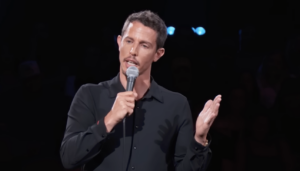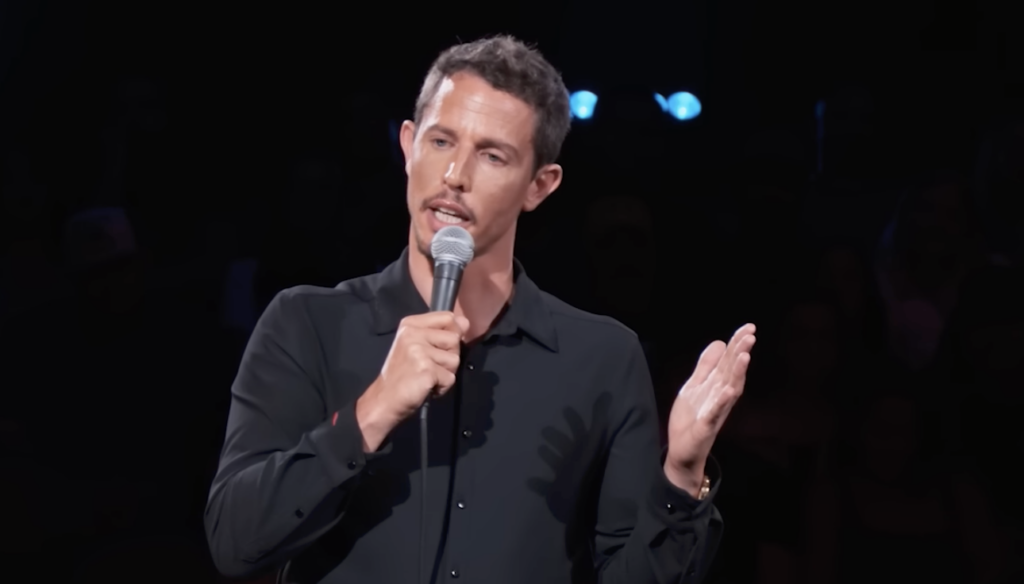
There is a peculiar irony in the career of Tony Hinchcliffe. For nearly two decades, he has been one of the most recognizable anonymous people in comedy. He was the comedian whom other comedians knew long before civilians caught up. While Netflix was busy minting stars out of polished storytellers with carefully manicured brands, Hinchcliffe was in the back corner of the Comedy Store, sharpening insults into surgical instruments and hosting what amounted to an open mic with the emotional volatility of a Caligula-style Roman coliseum. Then, almost accidentally, America noticed.
Over the last few years, Hinchcliffe has become strangely unavoidable. He popped up roasting Tom Brady and Kevin Hart. He wandered into the chair-busting world that is WWE, he made headlines for appearances tied to Republican politics, and, perhaps most importantly, turned Kill Tony into the most influential comedy show on the planet. Every Monday night, somewhere between eight hundred thousand and several million people gather on YouTube to watch aspiring comics endure sixty seconds of stand-up followed by several minutes of either encouragement or public detonation. Nearly thirteen years and almost eight hundred episodes later, Kill Tony has become less of a podcast than a farm system for comedy. Austin may claim to be the new capital of stand-up, but Hinchcliffe has become its unofficial commissioner. His greatest talent isn’t simply telling jokes. It’s spotting people who can.
He has launched careers with the confidence of a Hollywood producer and ended others with the efficiency of a medieval executioner. Watching him evaluate comics is like watching Simon Cowell if Simon Cowell actually knew what he was talking about. He could probably run a talent agency. Instead, he has built one accidentally, one minute at a time. So Man of the People, his third Netflix special under a broader deal with the streamer, arrives carrying more expectations than perhaps any special in recent memory. It isn’t really an introduction to Tony Hinchcliffe. It’s a coronation. Or at least it’s supposed to feel like one. It’s his coming-out party of sorts to the massive audience he’s conjured up. Instead, it landed with a surprising thud amongst his fans and critics alike.
The internet, never known for moderation, treated the special as though Hinchcliffe had personally canceled comedy. Even Tony joined the pile-on, joking on Kill Tony that he’d earned himself one of the show’s infamous “little joke books”, which is the consolation prize usually reserved for bucket-pull comics who bomb spectacularly. It was an unusually self-aware admission from someone whose confidence generally arrives several minutes before he does.
I should admit my own bias. I’ve seen Kill Tony live several times. I’ve watched Hinchcliffe perform stand-up in clubs and arenas. I’ve spent evenings quoting his jokes with friends days after the show ended, the way people used to repeat George Carlin bits or Norm Macdonald punchlines. It’s not because they were shocking, but because they were engineered with impossible precision. Many of those same jokes appear here.
Early on, Hinchcliffe immediately leans into the long-running gag that he’s secretly gay, comparing gun ownership to having a second penis before explaining, in a sentence that would make a network censor burst into tears, what happens to both when he gets home. It’s juvenile, outrageous, and exactly the kind of joke his audience came to hear. “He puts both in his mouth.” Watching it in the theater where I first heard versions of these routines, the room shook with laughter. Watching it later on Netflix felt different.
The jokes themselves haven’t suddenly stopped working as they did live. His bit about booking an abortion flight on Spirit Airlines remains such an absurd collision of economics and morality that it feels almost like an airline commercial written by Jonathan Swift. Another joke wonders what word people accidentally shout after stubbing their toe when nobody else is around, which is a premise that dances along the edge of social taboo while revealing something universal about private human behavior. This has always been Hinchcliffe’s trick. Beneath the offensiveness is architecture. The shock is merely the wrapping paper. Which makes the backlash fascinating.
Some criticism inevitably comes from people who have already decided what Tony Hinchcliffe represents. Spend five minutes online, and you’d think he spends his weekends organizing hate rallies. Spend five minutes watching Kill Tony, and you’ll discover someone who has spent over a decade enthusiastically promoting comedians of every imaginable background, often before anyone else knew their names. Agree with his comedy or not, the caricature rarely resembles the person. The more convincing criticism is considerably less dramatic. The special simply doesn’t move.
Stand-up has rhythm. The best comedians create the illusion that they’re sprinting downhill while somehow remaining perfectly balanced. Hinchcliffe has always possessed that rhythm live. Here, however, something interrupts it. Whether it’s an editorial decision in post-production or a deliberate attempt to slow his cadence for Netflix’s broader audience, the momentum keeps stopping. Jokes arrive, land, and then linger awkwardly while Tony explains, elaborates, or pivots into crowd work that never quite earns its interruption.
It’s a curious problem because crowd work is one of his greatest strengths. On Kill Tony, roasting audience members and amateur comics feels spontaneous, dangerous, and even athletic. In a polished hour-long special, those same detours function as unnecessary rest stops on an otherwise enjoyable road trip. But the destination remains worthwhile.
His gleeful attacks on Canadians, his wonderfully ridiculous closing material involving Jewish stereotypes that somehow feels closer to a Looney Tunes cartoon than actual malice, and countless smaller one-liners remind you why comedians hold Hinchcliffe in such high regard. The jokes are still sharp. They simply aren’t allowed to cut in rapid succession.
Perhaps that’s the paradox of becoming mainstream. Tony Hinchcliffe became famous performing in a format built on velocity, unpredictability, and communal energy. Kill Tony is organized chaos. A Netflix special asks for something entirely different. It asks for precision disguised as ease. The room has to disappear so the viewer at home feels like they’re the only person laughing. That illusion never fully materializes here.
Still, the fury surrounding Man of the People feels wildly disproportionate to its shortcomings. This isn’t a failed special. It’s an oddly paced one. There’s a meaningful difference. Strip away the pauses, tighten the edit by a few minutes, trust the jokes instead of explaining them, and you’re left with the special many of us expected, which is greatness.
Fortunately for Hinchcliffe, no comedian gets more opportunities to refine his craft than someone who performs every single week before an audience that refuses to let him coast. If Man of the People occasionally stumbles over its own timing, Kill Tony remains a weekly reminder of why Tony Hinchcliffe has become one of comedy’s most indispensable figures. The wine is still flowing there. It’s just that someone simply forgot to uncork the bottle quickly enough.