The documentary world is in a sustained boom. In the past decade, the genre has evolved from an art-house curiosity, something you’d stumble into at a film festival and pretend you’d always known about, into a full-fledged pop-cultural juggernaut. It’s no longer just the domain of meditative slow burns about beekeeping in rural Macedonia. Now, we gorge ourselves on true crime, cult exposés, and feverish cultural curiosities like Balloon Boy, Tiger King, and Pepsi, Where’s My Jet?, each more baroque in their implausibility than the last. Netflix, of course, has become the Costco of documentaries, offering them in bulk, at scale, and with an uncanny knack for making us click “Next Episode” when we know we should be asleep.
But every so often, amid the glut, a documentary series emerges that feels different, not just bingeable, but monumental. America’s Team: The Gambler and His Cowboys, a eight-episode saga from Chapman and Maclain Way (Wild Wild Country), isn’t merely about a football team. It’s about mythology, ego, power, and the eternal, slightly foolish human desire to get the band back together. It’s also about Dallas, a city whose skyline and psyche are shaped in equal parts by oil money, real estate, and the weekly ritual of Cowboys football.
To understand the Cowboys, you have to understand their omnipresence. If you’ve never lived in Texas, you might think of them as just another NFL franchise, albeit one with flashier uniforms and a cheerleading squad that doubles as an international brand. But in Dallas, the Cowboys are the weather. They are the barometer of civic mood, capable of making Mondays feel like coronations or funerals. The silver star is everywhere, painted on highways, embroidered on babies’ onesies, glowing on the massive screen that hovers like a UFO inside AT&T Stadium. To love them is to invite heartbreak; to hate them is to admit you still care.
Full disclosure, I was born into this. I’ve spent over forty years in Dallas, and my closet is an archive of Cowboys merchandise, ranging from the practical (winter hats) to the questionable (a leather jacket with shoulder pads). Like many fans, I have endured the slow transition from Super Bowl dynasty to the league’s most elaborately staged cautionary tale. And yet, I watch. We all do. Hope springs eternal, or at least through training camp.
The docuseries begins in the late ’80s, when Arkansas oilman Jerry Jones bought the Cowboys for $140 million, then considered an audacious sum, and promptly fired Tom Landry, the stoic, fedora-wearing coach who had led the team for 29 seasons. In Dallas, this was less a sports decision than a civic rupture, still discussed by boomers in tones usually reserved for the Kennedy assassination. Jones replaced Landry with Jimmy Johnson, his old college roommate from Arkansas, a move that reeked of nepotism until it didn’t.
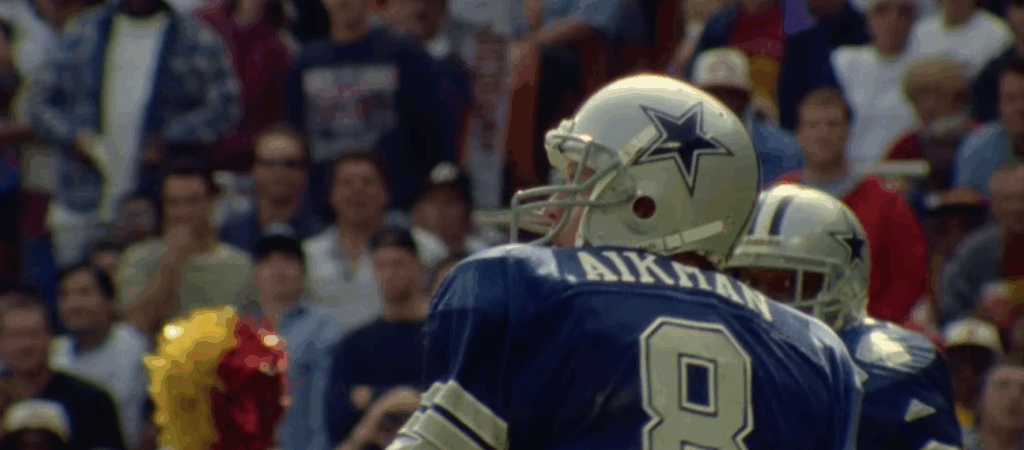
From there, the Cowboys embarked on one of the most rapid ascents in sports history, a 1–15 seasoerica’s n transformed into three Super Bowl victories in four years, fueled by a cast of future Hall of Famers, Troy Aikman, Michael Irvin, Emmitt Smith, Charles Haley, and one blockbuster trade that sent Herschel Walker packing in exchange for enough draft picks to build a small army.
WATCH ON NETFLIX EXCLUSIVELY
The Ways bring this saga to life with a cinematic flourish unusual for sports docs. The camera glides through interviews as if tracking an outlaw in a Western; the score swells like a Morricone soundtrack. There are slow-motion replays not just of plays but of press conferences, as if to remind us that in Dallas, football is equal parts sport and theater.
The access is extraordinary. Jerry Jones speaks with the candor of a man who knows no microphone can outshine his own legend. Jimmy Johnson recalls the glory days and the fights that ended them, his hair still as immaculately constructed as it was in ’92. Michael Irvin oscillates between poetic reflection and gleeful self-incrimination, offering fresh context on his infamous purple mink coat. Barry Switzer, often written off as a placeholder coach, emerges as a genuine players’ favorite. Even Deion Sanders, in his cameo, distills the entire Jones era into a single, devastating sentence, “Jerry’s not trying to build the best team. He’s trying to build that team again.”
And yet, for all its grandeur, the series is also a scrapbook of small, oddly tender moments, the Cowboys watching Michael Jackson’s halftime show instead of returning to the locker room; the impromptu locker-room speeches after playoff wins; the laughter that breaks out when old teammates reunite on camera.
By the final episodes, the focus shifts from victory to longing. The Cowboys have not returned to the Super Bowl since the Clinton administration, and the team’s modern era is absent from the screen, not because there’s nothing to say, but because the real drama lies in the unresolved marriage of Jerry and Jimmy. Two men, once inseparable, were torn apart by ego and success, and now hover in the strange limbo of public reconciliation. The doc ends less like a sports highlight reel and more like the closing scene of a buddy movie, with both parties smiling for the cameras but still thinking about what might have been.
Watching America’s Team is to be reminded that football is not just a game but a narrative engine, one that churns out myths as readily as touchdowns. It’s about the city that raised the team, the personalities that shaped it, and the fans, like me, who keep showing up, convinced that this is the year, even when we know better.
How ’bout them Cowboys? Well, if you have to ask, you’re already part of the story.