Sometimes horror wants to instruct. It creeps in wearing a mortarboard, whispering about climate catastrophe, generational trauma, or the unpayable debt of capitalism, while blood drips politely onto the linoleum. We nod, we reflect, and we feel appropriately chastened. And then sometimes, praise be, it wants nothing more than to chase us through the woods with a shovel. Dolly, the latest from director Rod Blackhurst, lands gleefully in the latter camp, though with just enough thematic heft that you can still pretend, as you wipe popcorn butter off your jeans, that you’ve engaged with Art.
The film stars Sean William Scott, yes, forever Stifler, though here he plays a dad who has swapped pale ales for parental responsibility, Fabienne Therese, and Ethan Suplee, still a reliable screen presence, still reminding us that underneath his muscular size beats the heart of a mensch. They find themselves trapped in a nightmare spun from seventies celluloid. Blackhurst, who previously directed Amanda Knox and co-wrote Night Swim, shoots Dolly with a grimy visual palette that seems designed to clog your lungs with dust. The colors are sunburnt; the shadows look like they smell of mildew. It’s a conscious throwback to The Texas Chainsaw Massacre, a film that has never stopped feeling like it was shot by lunatics on a dare.
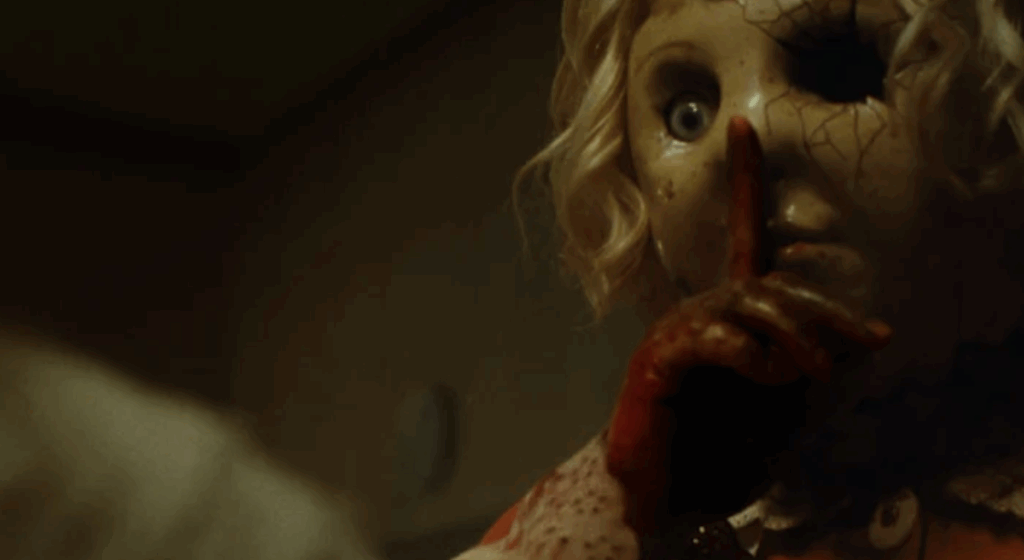
And at its strange, pounding heart, Dolly is a family drama or maybe more accurately, a family hostage situation. The titular Dolly is no ordinary slasher. She’s a hulking, emotionally underdeveloped creature who dons a doll mask and kidnaps people to act out a twisted vision of motherhood. When Chase (Scott) tries to sneak off for a romantic proposal weekend with his girlfriend Macy (Therese), Dolly interrupts and kidnaps Macy, dressing her in a ruffled, old-fashioned doll dress, and forcing her into a deranged game of house. “Play along,” a voice instructs Macy, which has to be one of the bleakest parenting tips ever uttered in cinema.
The setup is simple, the runtime lean at just eighty-eight minutes, but Blackhurst wrings every drop of tension and dark comedy from the premise. The gore, when it arrives, isn’t just shocking; it’s jaw-slackening, designed to make you question both your appetite and your life choices. Dolly herself is equal parts slasher and tragicomic mother figure, a woman-shaped monster who just wants a family, even if she has to build one from stolen parts. The effect is grotesque and weirdly sad, like Norman Bates in a PTA meeting.
Scott is excellent here, grounding the film with a lived-in weariness that feels a thousand miles from Stifler’s gleeful chaos. He plays Chase not as an action hero but as a dad who knows he’s outmatched and presses on anyway. Therese, meanwhile, sells every beat of Macy’s terror, confusion, and reluctant survival instinct, keeping us tethered to reality even as the film flirts with Grand Guignol absurdity.
What makes Dolly worth celebrating isn’t just its throwback aesthetics or its willingness to drench the screen in stage blood. It’s the way Blackhurst understands the double edge of horror, the comedy of its exaggerations, the terror of its sincerity. In Dolly’s demented proverbial tea parties and twisted lullabies, there’s both a parody of motherhood and a sincere, if profoundly unsettling, lament about loneliness. Blackhurst plays both sides without blinking, giving us a film that feels both scuzzy and strangely thoughtful, like finding a philosophy textbook stuffed in a grindhouse theater’s lost-and-found bin.
They don’t make films like Dolly anymore, or rather, they don’t usually let them out of the editing bay, fearing no one will sit through eighty-eight minutes of sadistic make-believe motherhood. But Blackhurst has. And thank God he did. Dolly is brutal, funny, sometimes unbearably tense, and always alive with that dangerous, grimy energy that horror had in the seventies, before everything got too clean, too digital, and too safe.
Sometimes horror is a sermon. Sometimes it’s a sledgehammer. Dolly is a bit of both, though mostly, it’s a sledgehammer in a doll mask.