There’s something almost charming about the way Australian twins Danny and Michael Philippou have approached horror. Their debut feature, Talk To Me (2022), a lean, mean ghost story involving a haunted ceramic hand and some extremely reckless teenagers, took less than $5 million to make and somehow conjured nearly $100 million at the box office. It wasn’t just the scares, it was the sly undercurrent of grief, the quiet ache beneath the jump scares, that made it linger. The Philippou brothers weren’t just here to make us scream; they were here to make us feel something while screaming.
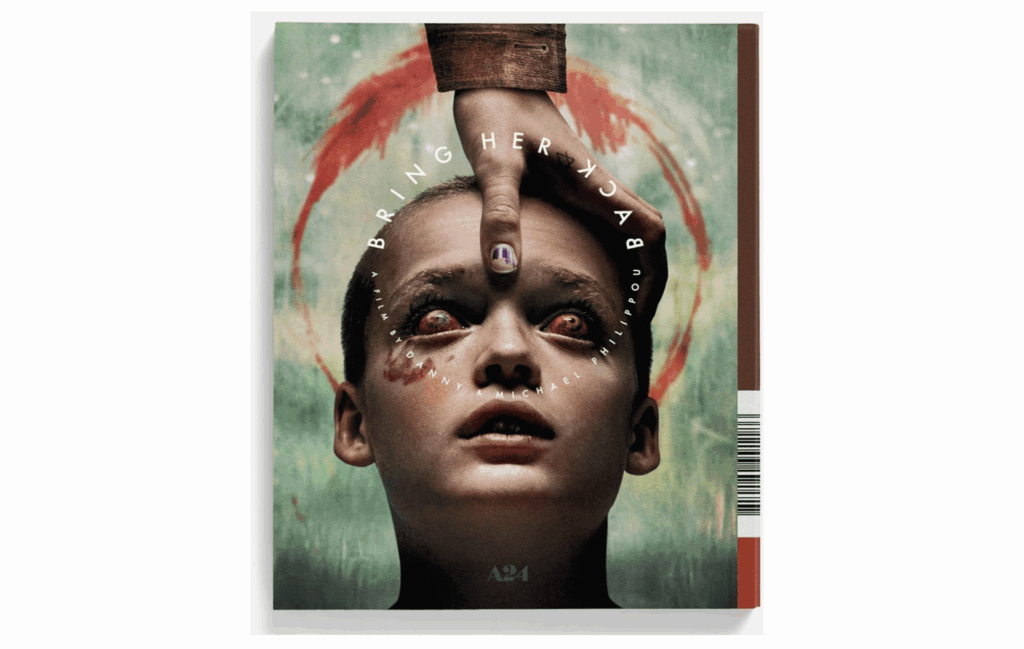
Which brings us to their second feature, Bring Her Back, a film that asks the ultimate question of grief: “How far would you go to resurrect the person you loved most?”, and then answers it with a VHS tape, an alarming amount of gore, and a demonic child who, at one point, gnaws on a butcher knife like it’s a carrot stick.
Here’s the thing about sophomore efforts: most filmmakers, drunk on success and studio resources, confuse “bigger” with “better.” The Philippous, to their credit, swing hard. The result? Well, it’s… complicated. Bring Her Back wants to be a dozen movies at once. It’s part grief drama, part supernatural horror, part family tragedy, part VHS necromancy tutorial, and while it doesn’t quite juggle them all gracefully, it never stops being fascinating.
At the heart of the story is Andy (Billy Barratt), a 17-year-old trying to hold it together after the sudden death of his father. He and his blind stepsister Piper (Sora Wong) are placed in a foster home run by Laura, played with unhinged delicacy by Sally Hawkins (The Shape of Water). Laura, we learn, is drowning in grief of her own, her daughter died in a terrible accident, and in the kind of decision that makes horror movies both maddening and delicious, she pops in an old VHS tape promising a DIY method for, well, reversing death.
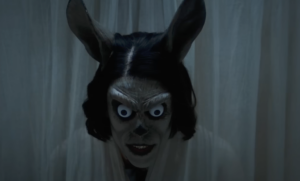
This is where the Philippou brothers lean all the way in. The resurrection process isn’t a soft-focus, Pet Sematary-style tragedy; it’s vicious, visceral, and unapologetically evil. Imagine a YouTube how-to video filmed by someone possessed. There’s blood, bone, screaming, and a steadily escalating sense of demonic chaos. One of the other foster kids slowly morphs into a creature that makes the Xenomorph look polite, and there’s a stretch of the movie where nearly every surface, kitchen countertops, walls, bodies—becomes something to chew on.
PURCHASE BRING HER BACK 4K
And yet, amid all the carnage, Bring Her Back keeps circling grief, poking at the raw question of what people will do when loss carves a hole too deep to climb out of. That’s the part that works best. The problem is that the film wants us to mourn, recoil, laugh, and gasp, sometimes in the same thirty seconds, and while Talk To Me struck a balance between terror and tenderness, Bring Her Back occasionally collapses under the weight of its own ambitions. It’s overstuffed, chaotic, and messy, but also strangely beautiful for it.
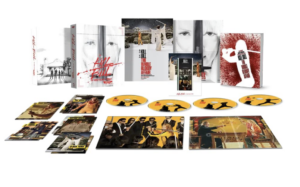
The 4K release from A24, though, is where this thing really sings. The color palette is bright and bold, a deliberate contrast to the buckets of arterial spray that decorate the interiors like abstract expressionism. The detail is so sharp you can practically feel the sticky latex of the practical effects, and the Dolby Atmos mix drops you right into the chaos, with guttural whispers and bone-snapping cracks crawling out of the surround speakers. There’s an excellent audio commentary from the Philippou brothers, a 20-minute behind-the-scenes featurette full of gleefully deranged makeup tutorials, a deleted scene, and a hidden bonus: the full, uncut DIY resurrection VHS, in all its grimy, analog glory.
A24, in their infinite quirkiness, also includes six collectible art cards, because of course they do. Personally, I’d trade them for a booklet of essays, interviews, or concept sketches, but I suspect I’m in the minority there.
So, is Bring Her Back perfect? No. It’s a wild, messy, bloody sprawl of ideas, some brilliant, some overcooked. But the Philippou brothers have done something that, frankly, a lot of horror filmmakers fail at with their second films: they’ve made something worth arguing about. They’re testing boundaries, chasing emotions, and occasionally biting off more than they can chew, sometimes literally.
Recommended, with a warning: this one’s not for the faint of heart. But then again, grief rarely is.