
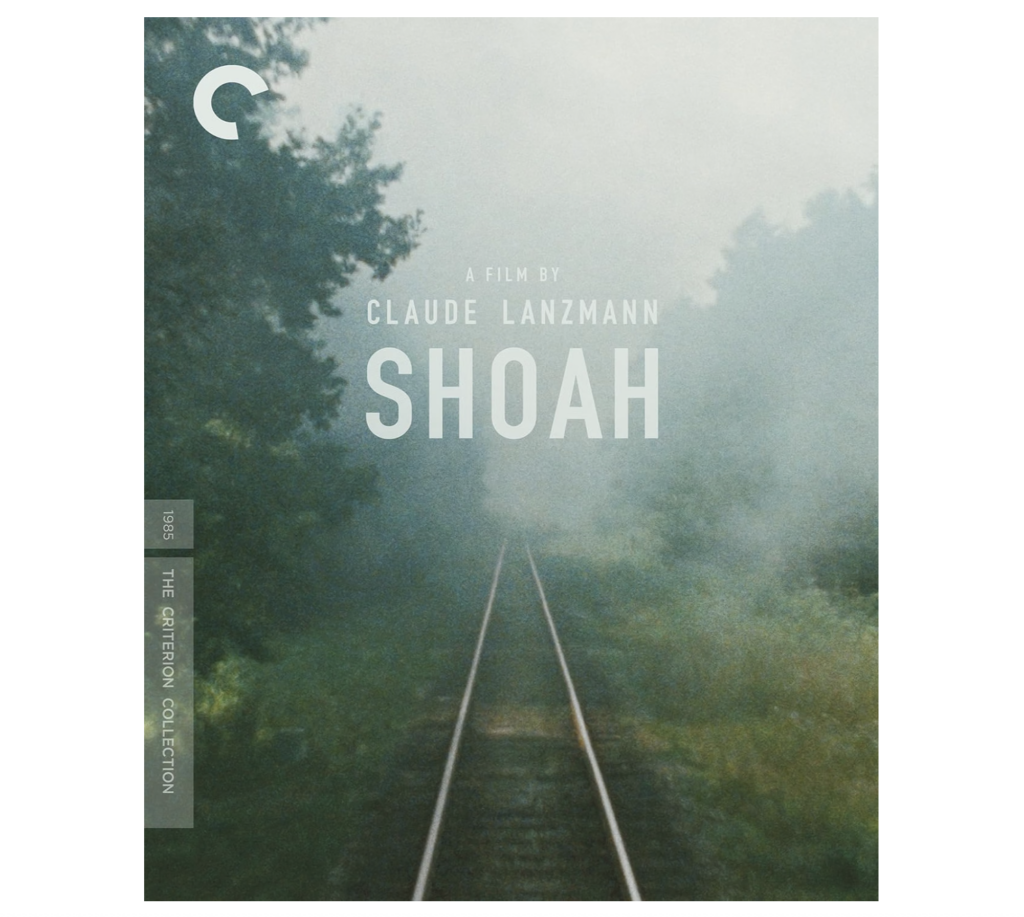
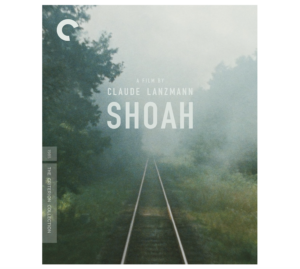
There are movies you watch, movies you admire, movies you recommend to friends, and then there are movies that seem to watch you back. Claude Lanzmann’s Shoah belongs to that last, peculiar category. It is not a movie that politely asks for your attention before sitting quietly on the shelf when the credits roll. It moves in, rearranges the furniture, and refuses to leave. Criterion is giving Lanzmann’s monumental documentary another Blu-ray release, accompanied by All I Had Was Nothingness, a new ninety-four-minute film from Guillaume Ribot that takes another look at the making of Shoah and the extraordinary decade Lanzmann spent tracking down survivors, witnesses, perpetrators, memories, silences, and whatever fragments of truth could still be recovered from one of the darkest chapters in human history. The new film, assembled from previously unreleased footage and material featuring Lanzmann himself, feels less like a conventional bonus feature than an additional door into a film that already feels like an entire building.
I have spent an embarrassingly long time trying to figure out how to write about Shoah. Normally, writing about a movie is fairly simple. You watch it, you think about it, and decide whether it worked or not. You make a few jokes, perhaps complain about the third act, and then you move on with your life. It is one of the great luxuries of being a film critic. It’s the knowledge that, for the most part, nobody is going to arrest you for disliking the ending. Shoah is different. The moment I started thinking about writing about it, the usual machinery of criticism felt almost absurd. What exactly does one say about a film documenting the systematic murder of six million people? “Great cinematography, devastating subject matter equals four stars”? Despite it seeming like Oscar bait, at some point, the vocabulary of criticism begins to feel offensively small. So I have to begin somewhere more personal.
I was born and raised Jewish, and that faith, culture, and history remain part of who I am. The Holocaust is not an abstract chapter in a textbook to me. I have visited Holocaust museums. I have spoken with survivors. I have watched countless films and documentaries about what happened. I have listened to stories that I wish I could forget and stories that I know I never should. I also have family members I will never know because they were murdered by Nazi soldiers at the camps. I know some of the ways they died. I know some of what was done to people in my family. There is something uniquely strange about having relatives who are simultaneously part of your family tree and complete strangers to you. You inherit their absence, and you inherit a blank space where a person should be. There should be a face there, a voice, a personality, an annoying habit, a favorite song, and somebody who would have told a terrible joke at Thanksgiving. Instead, there is silence. And the silence has a date.
I have heard stories about what happened to members of my family that are almost impossible to process as the actions of human beings. One relative watched his wife, children, and mother murdered in front of him. He was subsequently subjected to horrific experiments, including the manipulation and destruction of his body. I have heard accounts of babies being thrown into the air and shot as if human life had somehow been transformed into a carnival game. After enough years of hearing stories like these, you begin to believe you have reached the outer limits of what human beings are capable of doing to one another. You think you’ve heard the worst.
And even after the terrifying events of October 7 with the appalling eruption of antisemitic hatred that resulted in the largest mass murder of Jews in a single day since the Holocaust, it was difficult not to feel that history, with its particular talent for returning when nobody had invited it, was beginning to repeat itself. And, in many ways, it was. What proved especially disorienting, however, was what followed. Within twenty-four hours, before the full scale of the atrocities had even begun to emerge, much of the public conversation had already shifted toward blaming Jews themselves for the violence committed against them, while some voices rushed to express solidarity with Hamas, the terrorist organization responsible for the attacks. It was a bewildering inversion of victim and perpetrator, and one that felt, at least to many Jews, like the rules of the moral universe had suddenly been rewritten overnight. There was no comfortable historical precedent for quite this particular combination of horror, accusation, and instantaneous certainty. It was, in that sense, uncharted territory, and a frightening reminder that the oldest hatreds do not necessarily disappear. Sometimes they simply acquire new vocabulary, new platforms, and a remarkably fast internet connection. Then Shoah comes along and quietly informs you that, no, unfortunately, there are still rooms in the basement for more stories and history.
That is one of the most frightening things about Lanzmann’s film. It reminds us that evil is not limited by our imagination. In fact, our imagination may be one of the things that protects us from understanding it. We imagine horror in cinematic terms because cinema gives horror a shape. There is a beginning. There is a climax. There is a villain. And there is usually some poor soul running down a hallway who makes the inexplicable decision to stop and look behind them. Even in tragedy, movies give us structure. Shoah takes that comfort away.
Lanzmann famously constructed the film without relying on archival footage of the Holocaust itself. There are no endless reels of concentration-camp imagery telling us what to feel. No actors are recreating the atrocities. There is no dramatic score arriving at precisely the moment when our hearts are supposed to break. Instead, there are people, survivors, witnesses, and former SS officers. There is also Lanzmann himself, his translator, a camera, alandscape, and a memory that has somehow survived long enough to be spoken aloud.
That choice changes the entire experience. In most Holocaust documentaries, archival photographs and footage inevitably create a distance. We are looking back at history and black-and-white photographs of people who have become historical figures simply because they were unlucky enough to have lived through history’s machinery. Spielberg’s Schindler’s List is a magnificent example of narrative filmmaking, placing an audience inside the Holocaust. It is extraordinarily powerful and, at times, emotionally devastating. But it is still a dramatization. We understand that we are watching actors inhabit a historical reality. We can leave the theater, drive home, order dinner, and eventually watch something involving superheroes punching each other through a building. Cinema gives us an exit.
Lanzmann doesn’t with Shoah. Instead, he gives us testimony. And testimony is much harder to escape. Within the first few minutes of Shoah, a survivor describes the work he was forced to perform. He was moving dead bodies and piling them into a mass grave. On his second day doing this, he discovered his own family among the dead. There is something so horrifyingly simple about that sentence that it almost defies commentary. What does one say after that? There is no clever observation waiting around the corner. There is no critic’s flourish that can improve it. The only appropriate response is to listen. And Shoah is, above everything else, a film about listening.
Lanzmann asks questions, sometimes brutally specific questions, and waits. He allows people to remember. Sometimes they answer calmly. Sometimes they smile. And sometimes they stop. One survivor is asked why he smiles while discussing his experiences. His answer is essentially that there is nothing else he can do. Then Lanzmann asks a more specific question about the camp, and the smile vanishes. His entire face changes. His body begins to tremble. The man who had been smiling a moment earlier is suddenly somewhere else entirely. That moment is devastating because it reminds us that trauma doesn’t necessarily live in the past. It can be sitting quietly in the body, waiting for the right question.
We often speak about “moving on” as if memory were a suitcase you could eventually unpack and throw away. But some memories don’t leave. They become residents who don’t pay rent, eat all your food, show up at three in the morning, and sit beside you while you’re trying to have a perfectly normal Tuesday. And for the survivors in Shoah, the past isn’t merely something they remember. It is something that happened to their bodies, their families, their communities, their languages, and their sense of what the world was supposed to be.
Lanzmann repeatedly returns to places where the camps once stood. Survivors and witnesses describe the trains, the unloading, the selections, the murders, and the disposal of bodies. They remember smells and sounds and textures. One survivor explains that he could not refer to a dead person as a corpse because the language of the camp had deliberately stripped the dead of their humanity. They were reduced to dirt and excrement. To refuse even the dignity of a word was part of the machinery. That detail has haunted me. Because genocide doesn’t begin with the gas chamber. It begins earlier. It begins when language changes. And it begins when a human being becomes “them.” It begins when a neighbor becomes a threat and when a group of people is described as vermin, disease, contamination, invaders, enemies, or anything else that makes it psychologically easier to imagine that their suffering matters less than ours.
Words can be small things. They can also be loaded weapons. And one of the great achievements of Shoah is that it pays attention to those words. Perhaps the most chilling sections of the documentary involve Lanzmann’s encounters with former SS officers. Some of these men were secretly recorded because they were willing to discuss what they had done, but did not want to be filmed doing it. Lanzmann and his crew devised an elaborate covert recording operation, with equipment hidden inside a room and engineers outside receiving the signal. The mechanics of it sound almost absurdly complicated until you remember what they were trying to document. It was men discussing the routine mechanics of exterminating human beings.
What makes these conversations so horrifying is how ordinary some of the explanations sound. Some men insist they were following orders. Others claim they didn’t understand the full extent of what was happening. It is the familiar human instinct to place a little distance between the self and the terrible thing one has participated in. I was only doing my job. I didn’t make the decision. Someone else told me to do it. History is full of people who discover, usually after the fact, that they were apparently not responsible for anything. It is one of humanity’s more impressive tricks.
Then Lanzmann goes into Germany and films ordinary people living ordinary lives. They shop, eat, drink, and they go about their days. There is something profoundly unsettling about watching normal life continue in places where extraordinary evil once happened. The streets don’t look evil. The buildings don’t look evil. A pub that is serving delicious cold beer certainly doesn’t look evil. An old man behind a bar looks like an old man behind a bar. And then Lanzmann shows him a photograph of a former SS officer and asks whether he recognizes the man. Lanzmann asks the man behind the bar, “Is this you?”
The man’s face changes. There it is. Memory and caught in the act. No dramatic music is required here. No actor needs to scream. A photograph is enough. This is what Lanzmann understood about documentary filmmaking. Sometimes the camera doesn’t need to show you the crime. Sometimes it only needs to show you the face of the person who remembers it. That is also why Shoah feels so frighteningly contemporary. The Holocaust happened less than ninety years ago. That’s not ancient history. That’s barely enough time for a generation or two to pass the story along. There are people alive today who were children when it happened. There are families still carrying photographs of people who never came home. Some people inherited their grandparents’ silence before they ever inherited their stories. We like to imagine that humanity learns. It doesn’t always. We like to imagine that once something sufficiently monstrous happens, civilization collectively looks at itself in the mirror and says, “Well, let’s never do that again.” History, unfortunately, has terrible reading comprehension.
Across the world, Jews continue to be murdered, displaced, dehumanized, and persecuted because of who they are. Genocide and mass violence have not disappeared simply because we built memorials to previous victims. Hatred did not retire when the twentieth century ended. It merely updated its wardrobe. This is why Shoah is not an artifact. It is a warning. And perhaps the most important warning it gives us is that atrocities are not carried out by monsters who spend their mornings practicing evil laughter in a dungeon. They are carried out by human beings. People with jobs and families. People who shop for groceries, and who sit in pubs, and people who get to go home at night. That may be the hardest thing to accept. Evil is not always theatrical. Sometimes it has office hours.
PURCHASE SHOAH ON CRITERION
Criterion’s presentation makes this extraordinary work even more accessible. The film receives a 4K restoration from the original 16mm negative, presented in its original 1.37:1 aspect ratio. The restored image retains the natural grain of the material while improving clarity and depth across the interviews and locations. The varying filming conditions mean the color and visual quality naturally fluctuate, but that variation is part of the film’s texture rather than something to be scrubbed away in pursuit of artificial perfection.
The audio is presented in lossless French LPCM mono, which is exactly what this film needs. There is no cinematic thunder required here. The most important sound is the human voice. Sometimes the translator speaks over the person being interviewed. Sometimes several languages occupy the same conversation. Criterion’s English subtitles remain clear and well timed, and the restoration gives the dialogue an impressive clarity while eliminating the distracting hiss, pops, and cracks that can accompany older recordings.
The supplements are extensive and unusually meaningful. A Visitor from the Living explores Lanzmann’s interview with Maurice Rossel and the history surrounding Theresienstadt. Sobibor, October 14th, 1943, 4 P.M. presents Lanzmann’s lengthy conversation with Yehuda Lerner, who participated in the Sobibor uprising. The Karski Report expands upon Lanzmann’s interview with Jan Karski, who served as a liaison during the war and discussed his encounters with Polish resistance networks and President Roosevelt. There are also interviews with Lanzmann himself, including material concerning the extraordinary process of making the film, along with a conversation involving cinematographer Caroline Champetier and filmmaker Arnaud Desplechin. The accompanying sixty-page booklet provides further context, including interview information and an essay by film critic Ken Jones. But for me, the new All I Had Was Nothingness may be the most emotionally significant addition because it turns the camera, at least partially, toward Lanzmann himself.
We spend so much of Shoah watching people remember that we can forget the person who spent ten years asking them to do it. Ten years. Imagine spending a decade walking into rooms and asking strangers to remember the worst thing that ever happened to them. Imagine traveling across countries, finding survivors, finding witnesses, finding perpetrators, sitting with them, listening, asking another question, listening again, and then going home and somehow becoming a normal person for dinner. What do you talk about at the dinner table after that? The weather? The price of gas? The fact that someone parked too close to your car?
Maybe you talk about those things. Maybe that’s how human beings survive. We have to retain the ability to complain about traffic even after hearing about the Holocaust. We have to be able to laugh at something stupid. We have to order pizza. We have to watch a bad television show. We have to occasionally argue about whether a movie is overrated. Life insists on being ordinary even when history has been anything but. That may be one of the most poignant things about Shoah. It’s the people in it who had lives before the Holocaust, and the survivors who had lives after it. The world kept moving. Children were born, people got married, people went to work, and then grew old together. And of course, people laughed again.
But something remained. It always remains. For me, that is the personal connection I can’t escape. I will never know the relatives who were murdered. I won’t hear their voices. I won’t know whether they were funny or serious, or whether they liked movies, or whether they were good dancers, or drank their coffee black, or if they were difficult at parties. I won’t know the little things that make a person a person. But I know they existed. And that matters. Remembering them is not a grand act. It is not heroic. It doesn’t change the past, and it doesn’t resurrect anybody. But it refuses the idea that their lives can be reduced to a number.
Six million is a number so large that the brain can’t really comprehend it. One person is comprehensible. One mother, one father, one child, one brother, one sister, one person who had a birthday, one person who had a favorite food, one person who had somebody waiting for them to come home, and one person who never did. That is what Shoah does better than almost any film ever made. It takes an event that history has transformed into statistics and gives those statistics voices again. It gives them faces. And sometimes it gives them silence.
There is a tendency to think that remembering is passive. That history is something we store, like old photographs in a box. But remembering is work. It requires us to keep telling the stories, and it requires us to listen when they become uncomfortable. It requires us to resist the temptation to make the past cleaner, simpler, or more convenient than it was. Most importantly, it requires us to remember people as people. That is the gift of Shoah, if a film this painful can be said to offer a gift. It doesn’t make the Holocaust understandable. It makes it personal. And personal is harder. Personal doesn’t let you hide behind numbers and say, “That happened a long time ago.” Personal puts a face in front of you, it asks you to listen, and then it asks you what you’re going to do with what you’ve heard.
I don’t think Shoah is a movie everyone will enjoy. In fact, I would be deeply suspicious of anyone who claimed they did. Enjoyment isn’t really the appropriate response. It is something else entirely. Shoah is an encounter and a reckoning. It’s a nine-and-a-half-hour confrontation with memory and the machinery of human cruelty. It is also one of the most important documentaries ever made. Maybe one of the most important films, period. There are movies we watch because we want to escape the world. Then there are movies we watch because we need to understand them. Shoah belongs to the second category.
And perhaps that is why it remains so difficult to write about. The film doesn’t need me to tell you that it is important. History has already done that. The survivors have done that. The faces in the film have done that, and the silences have done that. All I can really do is say what it did to me. It reminded me that history is not dead. It reminded me that the people we lose don’t become less real simply because we never got the opportunity to meet them. It reminded me that evil doesn’t always announce itself. And it reminded me that remembering is not something we do for the dead alone.
We do it for ourselves, and we do it for the living. We do it for the children who will eventually ask what happened. And when they ask, we have to be able to answer. We can’t answer with simply a number or a sanitized paragraph in a textbook. We also can’t answer with a comfortable story in which everything terrible happened to somebody else. We must answer with the truth. There were people. They had names. They had families. They had lives, and they were here on this Earth, only a couple of thousand miles away. And then they were gone.
Shoah is mandatory viewing, not because it is easy, but because it isn’t. It is painful, exhausting, disturbing, occasionally infuriating, and absolutely essential. Criterion’s restoration and wealth of supplemental material make this edition a remarkable home for a film that should never be allowed to disappear. I began by saying I didn’t know where to begin. Maybe I still don’t. But I know where I want to end. I want to end with our memory. Because there are some things that are too terrible to remember. And there are some things that are too terrible to forget. Shoah understands the difference. And so should we.





One Response
Fabulous wroting!